
EPR Annual Returns in India: How to File on the CPCB Portals Correctly
A practical, in-depth walkthrough of filing EPR annual returns on the CPCB portals — what data each return needs, how to reconcile obligations against certificates by category, the step-by-step filing process, and the pitfalls that cause errors and shortfalls.
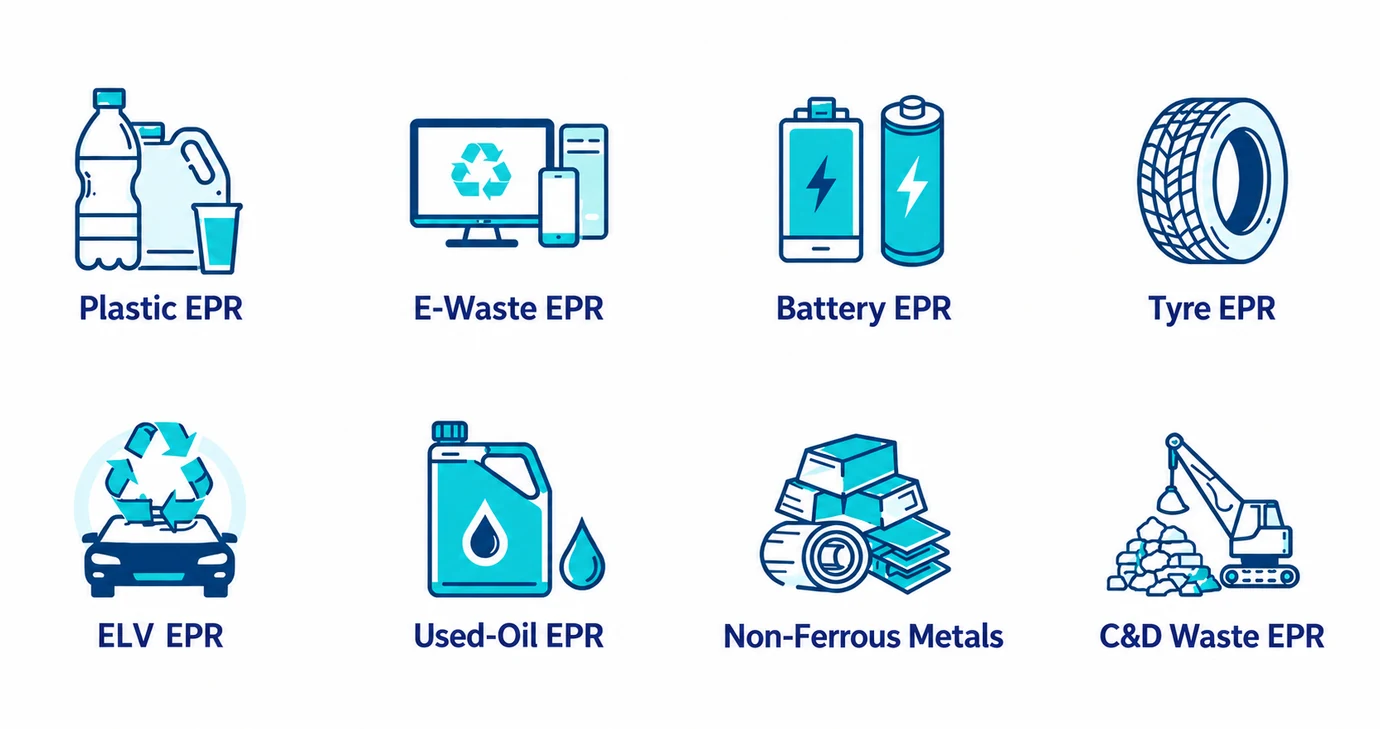
Registration gets you into the EPR system, but the annual return is where you prove you actually met your obligations. For every EPR regime you are registered under — plastic packaging, e-waste, batteries, tyres and others — you are expected to file periodic returns on the relevant CPCB portal, reporting what you placed on the market and how you fulfilled your target. The return is the moment your year of data, procurement and record-keeping is put on the record and reconciled.
Filing is not difficult when your records are in order. It becomes painful only when data has to be reconstructed at the last minute, or when a category-level shortfall surfaces with no time left to fix it. This guide covers exactly what each return needs, how to reconcile properly by category, the step-by-step filing process, and the pitfalls that trip companies up.
What an annual return reports
At its core, an EPR annual return reconciles two things: the quantity you introduced into the market during the reporting period, and the quantity you collected, recycled or processed to meet your obligation. Each regime’s portal captures this in its own format, but the underlying logic is identical across all of them:
- Quantities placed on the market, broken down by the categories or types relevant to that regime.
- Your resulting obligation or target for the period.
- Certificates procured and applied against the target, by category.
- Any shortfall or carry-over, handled as the rules provide.
Because the same logic underlies every regime, a business registered under several can use one consistent internal model to prepare all of its returns — even though each is filed on a different portal in a different format.
Gather your data before you log in
The most efficient way to file is to assemble everything first, then enter it in one pass. Trying to find figures while inside the portal is where errors and delays creep in. Before you log in, have ready:
- Category-wise quantities placed on the market, tied back to sales and import records.
- Your registration details and any prior-period figures the portal expects.
- Details of every certificate procured, including category, quantity and counterparty.
- Supporting documents the portal requires for upload.
- Your offline reconciliation showing obligation against certificates, by category.
Reconcile obligation against fulfilment
Before filing, build a simple reconciliation: obligation by category on one side, certificates applied by category on the other. Each category should net to zero shortfall. Doing this offline first means you enter the portal already knowing your numbers balance, and it surfaces any gap while there is still time to procure additional certificates in the right category.
A frequent and costly filing error is a total that looks sufficient but hides a category-level shortfall — enough certificates overall, but not enough in one specific category. Reconciling by category, not just in aggregate, is the single most effective way to prevent this. If a category comes up short and the deadline is near, that is exactly the situation you want to discover in your own spreadsheet rather than on the portal.
The step-by-step filing process
With data prepared and reconciled, the filing itself is straightforward:
- Log in to the relevant CPCB portal for the regime you are filing.
- Open the return for the correct reporting period.
- Enter your market-placed quantities by category or type.
- Enter the certificates applied against your target, by category, matching your reconciliation.
- Upload any required supporting documents.
- Review every figure against your offline reconciliation, then submit.
- Save or download the acknowledgement as proof of filing and retain it with your records.
Because portal interfaces, forms and required fields are updated over time, follow the current on-screen instructions and any official user guidance rather than assuming last year’s process is unchanged. Confirm the exact filing periods and format requirements on the official CPCB portals before you begin.
Common filing pitfalls to avoid
A handful of avoidable mistakes account for most filing problems:
- Leaving filing to the deadline, when portal load is high and last-minute certificate procurement is hardest.
- Entering aggregate figures without confirming the category-level breakdown balances.
- Failing to keep the acknowledgement and the underlying reconciliation for your records.
- Forgetting that each regime you are registered under has its own separate return — filing one does not cover the others.
- Assuming the portal, forms or filing period are unchanged from last year.
How Social Lab helps you file cleanly
Social Lab treats the annual return as the end point of a year-round process, not an annual event. We maintain category-wise market data and certificate records continuously, reconcile them each quarter so gaps surface early, and prepare each regime’s return from one consistent internal model. When filing time comes, we confirm the current portal requirements and filing periods, enter and cross-check every figure against the reconciliation, and retain acknowledgements and supporting evidence so your position is fully defensible. For businesses filing across multiple regimes, we coordinate all returns on a single calendar so none is missed.
Key takeaways
- The annual return reconciles what you placed on the market against what you recycled or processed, filed per regime on its own CPCB portal.
- Assemble all data and a category-level reconciliation offline before logging in, then enter it in one clean pass.
- Reconcile by category, not just in aggregate — an overall total that looks sufficient can hide a category shortfall.
- Each regime has its own separate return; filing one does not satisfy the others.
- Confirm current filing periods, forms and format requirements on the official portals, as they are periodically revised.
Frequently asked questions
How often do I file EPR returns?
You file periodic returns for each regime you are registered under, reporting what you placed on the market and how you met your target. The exact filing periods and cadence are set by the rules and revised from time to time, so confirm the current schedule on the relevant CPCB portal rather than assuming it is fixed.
If I am registered under several regimes, do I file one combined return?
No. Each regime — plastic packaging, e-waste, batteries, tyres and so on — has its own portal and its own separate return. Filing one does not cover the others. A single internal data model can prepare them all, but each must be submitted individually on its respective portal.
What if I discover a shortfall while preparing my return?
That is exactly why you reconcile offline first. If a category is short and time remains, procure additional certificates in that specific category before filing. If the shortfall cannot be closed, understand how the current rules treat it, including any environmental compensation, and plan accordingly rather than misreporting.
Do I need to keep anything after filing?
Yes. Retain the filing acknowledgement, your category-level reconciliation, and documentation for every certificate applied and every quantity declared. These make future returns easier and let you defend your figures if they are ever questioned in a regulatory review.
Get a free, no‑obligation assessment from our team — we reply within one business day.