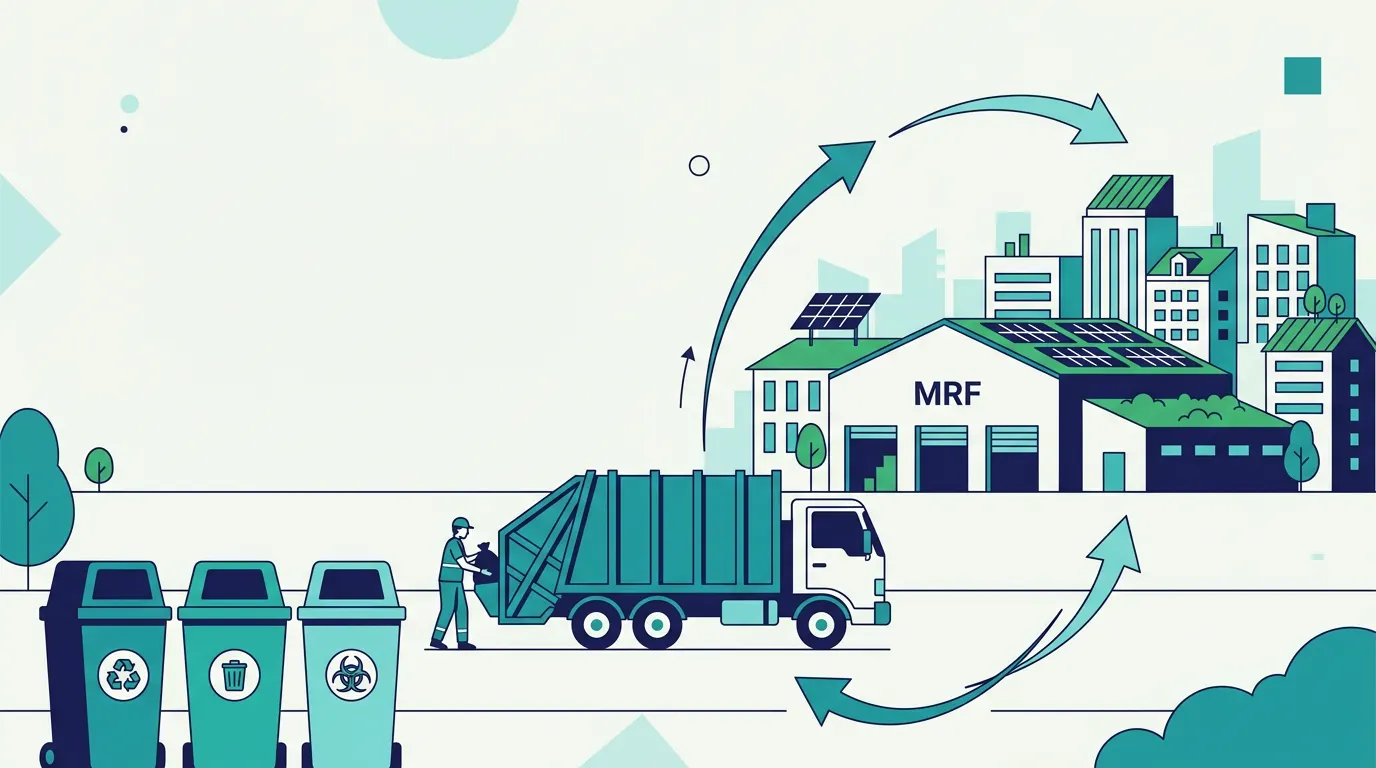
One mixed stream in. Three useful streams out.
Processing is where waste stops being a problem and starts being a resource. Social Lab designs the systems that turn wet waste into compost, dry waste into recovered material, and rejects into safely-handled streams.
What we do with every kind of waste
The split only works when each stream has somewhere real to go. We design all three pathways.
Wet waste is stabilised through windrow or pit composting and home composters — turned into FCO-grade, marketable compost instead of methane in a landfill.
Marketable compostDry waste is sorted and recovered — high-value to recyclers, low-value flexible plastic through purchase centres and labs like Precious Plastic.
Recovered materialResidual and mixed waste is routed responsibly — reducing open dumping and burning, and the GHG emissions that come with them.
Diverted from landfillEmissions cut, material recovered
Every figure below is from a Social Lab processing programme — the climate and circularity payoff of doing it properly.
At Mandede, scientific processing and composting cut 40.8 t of GHG in three months — a yearly reduction potential of 188.3 t.
Methods matched to the material
Stabilisation, turning with inoculum, sieving and FCO-grade quality control for marketable compost.
Sorting and recovery of dry waste, plastic purchase centres and Precious Plastic upcycling.
Home composters and decentralised infrastructure at Bulk Waste Generators, processing waste at source.
Systems that turned waste into resource
Municipalities & organisations we've delivered with


Processing closes the loop the rest of the system opens
What gets collected has to go somewhere — into compost, recovered material or recycled polymer.
Latest thinking on this
 Waste CircularityIndia's Circularity Leap: Key Learnings for Waste Management in 2026As India accelerates its transition to a circular economy, businesses and municipalities must adapt. Discover critical waste circularity learnings for 2026.
 Waste CircularityMaterial Sovereignty in India: Building Resilient Circular Supply ChainsIndia can strengthen material security by connecting smarter design, EPR, urban recovery, recycling quality and demand for verified secondary materials.
 Waste CircularityBuilding a Circular City: A Solid-Waste Roadmap for ULBsA practical, phase-by-phase solid-waste roadmap for Indian ULBs to move from disposal to circularity, aligned with SWM Rules 2016 and SBM-U 2.0, covering the full value chain from segregation to scientific disposal.
Need to turn your city’s waste into a resource?
We’ll build the processing pathways — compost, recovery and safe handling — that close the loop.
Or call +91 95794 42142 · [email protected]