Turning Wet Waste into City Compost: FCO Norms, Branding, and Market Linkage
A practical guide for ULBs on converting wet waste into FCO-compliant city compost, choosing the right technology, building a brand, and creating durable market linkage for sales.
In most Indian cities the biodegradable, or wet, fraction is the single largest part of the waste stream. It is also the fraction that causes the most damage when mismanaged: it is what rots in dumpsites, generates methane and leachate, feeds fires, and makes mixed waste impossible to recycle. Turning that wet waste into usable compost is therefore the highest-leverage move a ULB can make toward circularity.
But composting only closes the loop if the finished product is safe, saleable, and actually sold. Too many city composting plants produce material that piles up unsold because it does not meet quality norms or has no route to market, and an unsold heap of compost is just a slower dumpsite. This guide focuses on the four things that make city compost work: clean feedstock, FCO compliance, branding, and market linkage, plus the technology and economics that hold them together.
Where composting sits in the value chain
Composting is a processing stage, and it depends entirely on the stages before it. In the chain of segregation, collection, transport, processing, and disposal, a composting plant is only as good as the segregated wet waste that reaches it. That is why compost programmes cannot be planned in isolation; they are the downstream reward for getting segregation and segregated collection right first.
Start with clean feedstock
Compost quality is decided at the household, not the plant. Contaminated wet waste, laced with plastic, glass, or metal, produces compost with inert impurities that fail quality standards and repel buyers. Reliable source segregation and segregated collection are non-negotiable prerequisites, which is why composting sits downstream of collection integrity in any sensible roadmap. Sustained IEC that keeps households segregating is, in effect, part of the compost quality system.
Meet FCO norms so the product is legally saleable
City compost sold as a fertiliser or soil conditioner must comply with the specifications under the Fertiliser Control Order (FCO). The FCO sets parameters for compost, including limits on moisture, particle size, organic carbon, nutrient content, and heavy metals, and prescribes how it may be marketed. Complying with the FCO is what allows the ULB or its operator to sell compost as a recognised product rather than give it away as an unregulated by-product.
- Test finished compost against FCO parameters, including heavy-metal limits, before sale.
- Maintain consistency batch to batch; buyers will not return for a variable product.
- Keep records so quality claims can be substantiated to regulators and customers.
Match technology to scale
There is no single right method, and the choice should follow your characterisation study, available land, and operating capacity rather than a vendor’s preference. Each option suits a different scale and situation.
- Windrow composting suits larger centralised sites with space to turn long piles.
- Community or in-vessel composting suits neighbourhoods, markets, and bulk generators processing near the source.
- Biomethanation suits wet waste where energy recovery is viable, producing biogas alongside a digestate that can be composted.
- A decentralised network of small units often beats one large plant by cutting transport and reducing single-point failure risk.
Build a brand buyers can trust
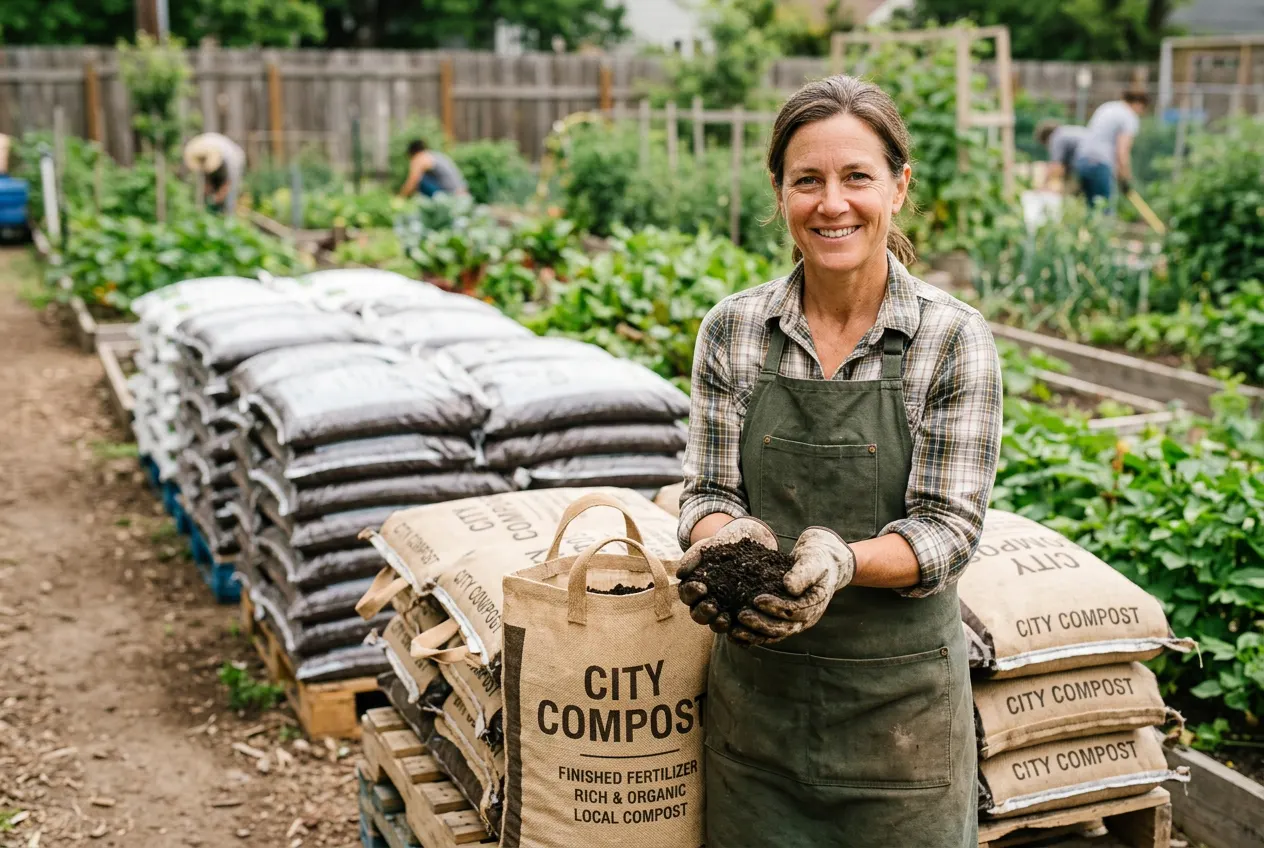
Compost that meets specification still needs an identity to sell. A recognisable brand and clear packaging signal quality and consistency, which matters enormously to farmers deciding whether to trust municipal compost on their fields. National and state programmes have promoted branding of city compost precisely to build this confidence and demand.
- Adopt a consistent brand name, packaging, and labelling with nutrient information.
- State the FCO compliance and application guidance clearly on the pack.
- Package in sizes suited to your buyers, from farm bulk to retail bags for gardeners.
Create market linkage before you scale production
The classic failure is building capacity first and looking for buyers later. Reverse it: secure offtake, then produce. City compost has several natural markets, and a resilient programme cultivates more than one so it is not hostage to a single buyer or season.
- Farmers and agricultural cooperatives, often reached through the fertiliser distribution network.
- The ULB’s own parks, gardens, avenue plantations, and landscaping contracts as a guaranteed base demand.
- Nurseries, horticulture, plantations, and bulk institutional landscaping.
- Co-marketing arrangements that bundle compost alongside chemical fertiliser sales.
Get the economics honest
Composting rarely pays for itself on compost sales alone, and pretending otherwise leads to abandoned plants. Value it correctly by counting avoided costs: the transport and landfill charges you no longer pay for every tonne diverted, plus the land and remediation costs you avoid by not dumping. Any policy support for marketing city compost further improves the picture. When avoided costs are on the ledger, decentralised composting usually looks far better than trucking wet waste to a dump.
Common pitfalls in city composting
- Building a plant before segregation is reliable, so it processes contaminated feedstock and fails FCO tests.
- Producing compost with no confirmed buyer, converting a waste heap into an unsold product heap.
- Judging viability on sales revenue alone while ignoring the avoided transport and disposal costs.
- Choosing technology to match a vendor’s catalogue rather than the city’s waste and land.
How Social Lab supports city compost programmes
Social Lab helps ULBs and CSR partners build compost programmes that actually sell their output: characterisation to size capacity, IEC to protect feedstock quality, technology selection matched to scale, FCO-aligned quality systems, brand and packaging development, and market linkage secured before production ramps up. Because the programme is monitored on tonnes diverted and compost sold rather than tonnes produced, it stays honest about whether the loop is really closing, and the avoided-cost case is documented for the city’s budget holders.
Key takeaways
- Wet waste is the largest and most damaging stream; composting it is the single highest-leverage circularity move for a ULB.
- Four things must line up: clean segregated feedstock, FCO-compliant quality, a trusted brand, and secured market linkage.
- Secure offtake before scaling production, and cultivate more than one buyer so demand is resilient.
- Judge the economics on avoided transport and disposal costs, not compost sales alone.
Frequently asked questions
Why does so much city compost go unsold?
Usually because one of the four pillars is missing: the feedstock was contaminated so the compost fails quality norms, there is no trusted brand, or, most often, no market linkage was arranged before production began. Compost is a product like any other; it needs a buyer lined up, not just a plant.
Is composting or biomethanation the better choice for wet waste?
It depends on scale, land, and whether there is a viable use for biogas. Biomethanation adds energy recovery and produces a digestate that can still be composted, but it is more capital and operations intensive. Composting is simpler and often cheaper at neighbourhood scale. Let the characterisation study and local conditions decide rather than defaulting to the higher-tech option.
Can a composting plant be financially self-sustaining?
Rarely on compost sales alone, but that is the wrong test. When you count the transport, land, and disposal costs avoided by diverting wet waste from the dumpsite, and any policy support for city compost, decentralised composting usually compares very favourably with dumping. Frame it as avoided cost, not just revenue.
Get a free, no‑obligation assessment from our team — we reply within one business day.