
Evaluation of the Solid Waste Management Project at Dharamshala
An impact evaluation of a model-ward SWM programme that lifted Dharamshala from 629th to 86th in Swachh Survekshan.
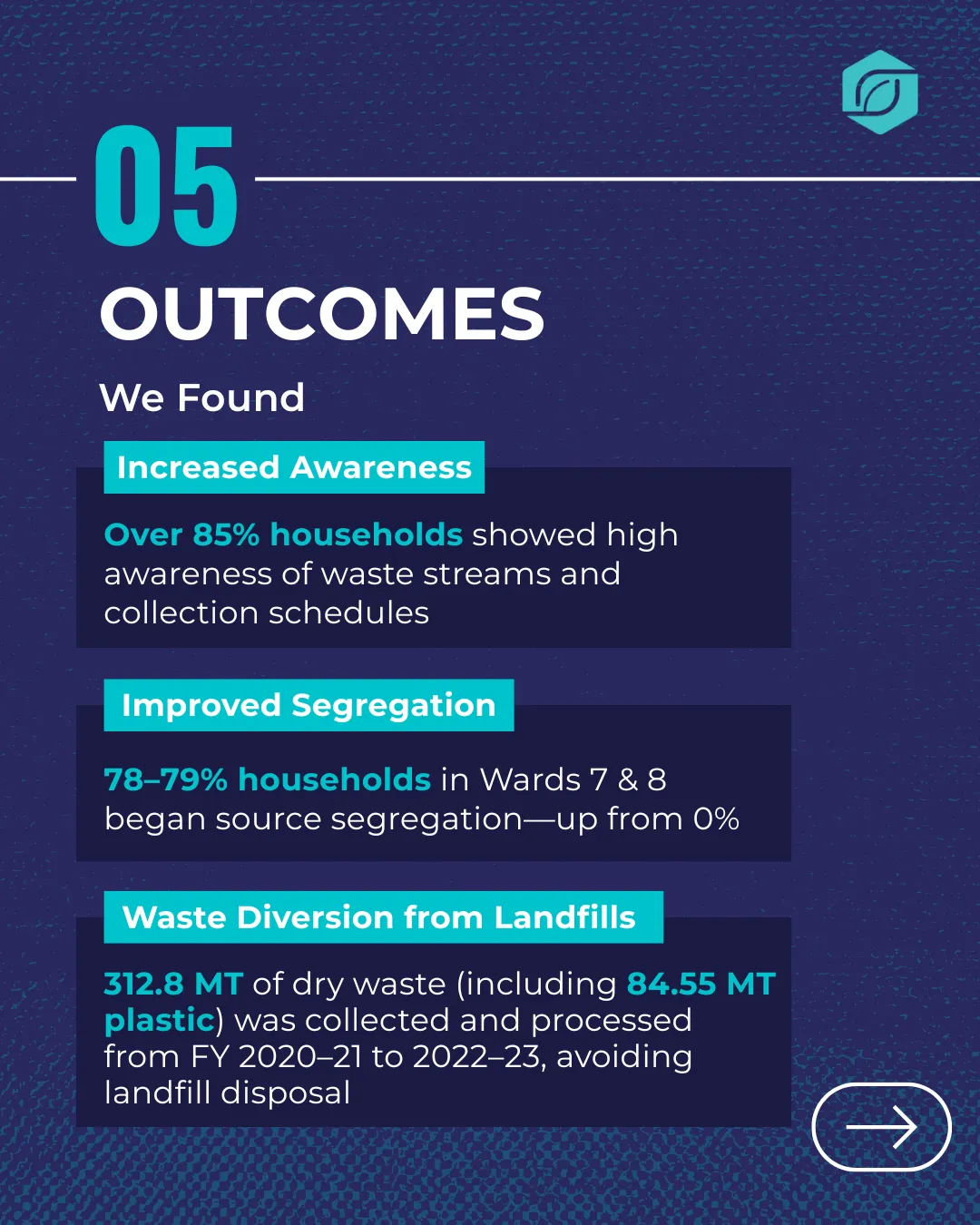
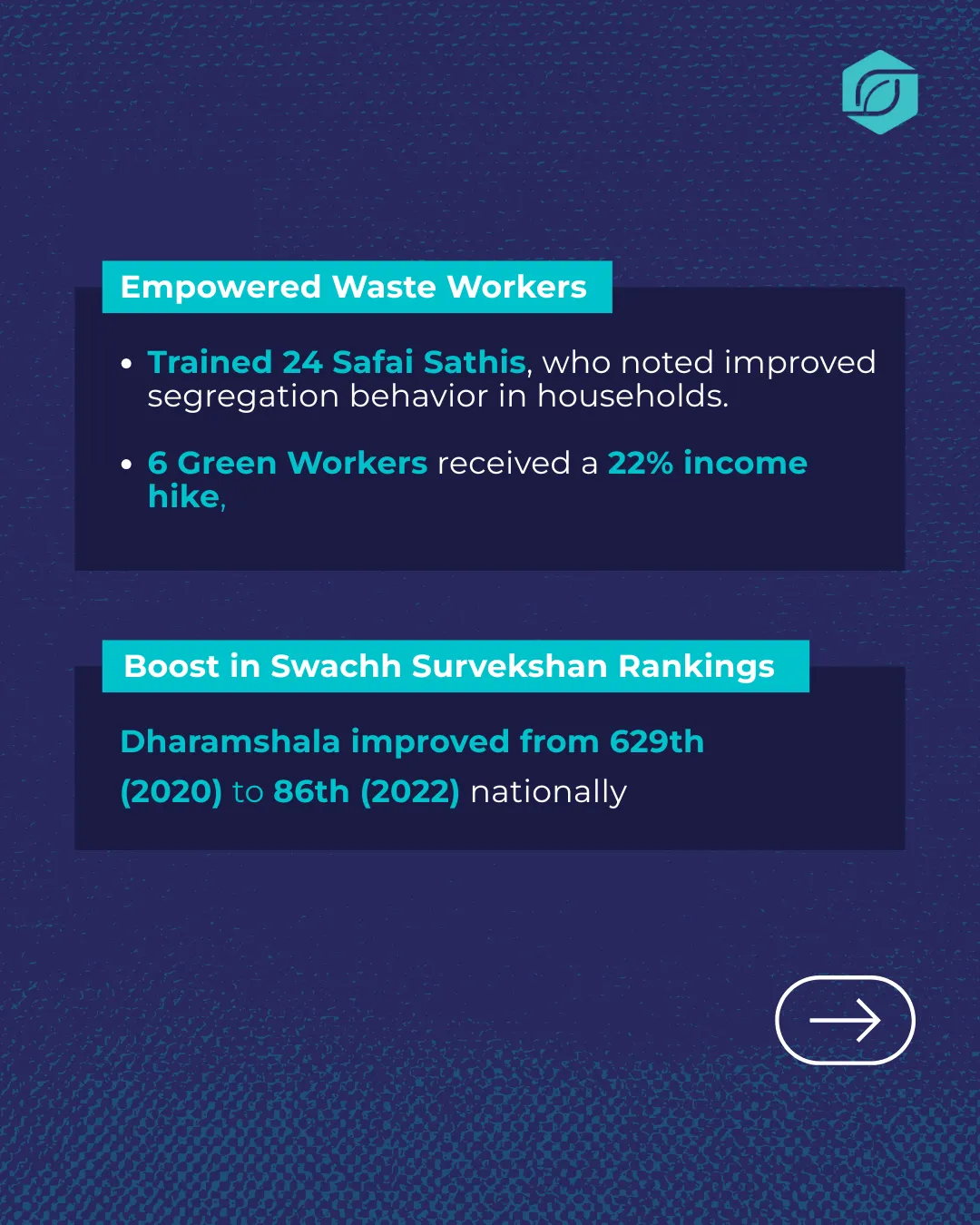
Overview. In Dharamshala — a tourist-heavy Himachal city battling trail littering and forest dumping — the H T Parekh Foundation backed Waste Warriors Society to overhaul solid waste management. Social Lab conducted the independent impact evaluation: source segregation rose from 0% to ~79% in the model wards, 312.8 MT of dry waste was diverted from landfill, and the city climbed from 629th (2020) to 86th (2022) in the national Swachh Survekshan rankings.
Project story
Swipe through the project as we published it — real slides from the field.
Background
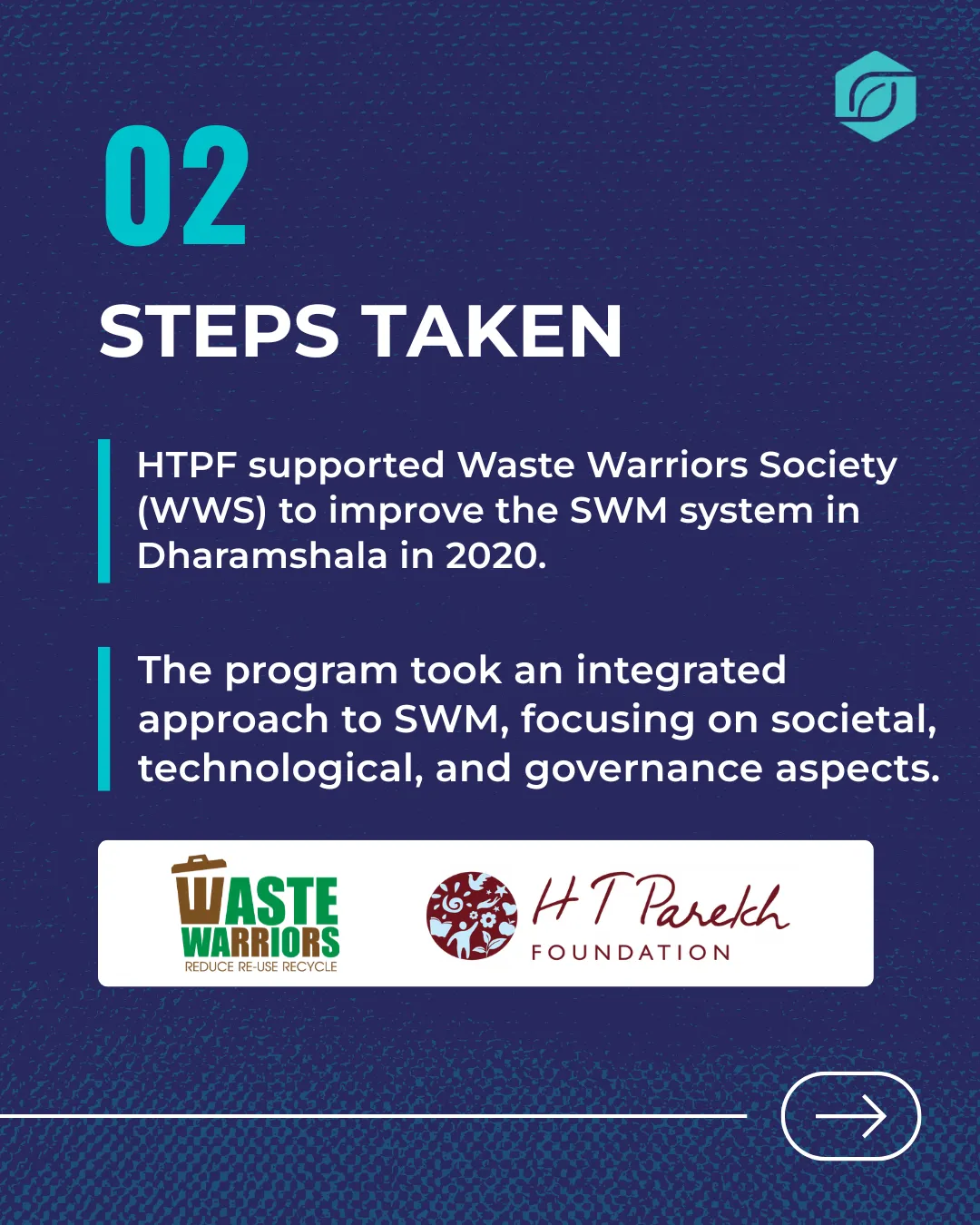
Dharamshala draws heavy tourist footfall into a fragile Himalayan landscape, which made unmanaged waste both highly visible and ecologically damaging. In 2020 the H T Parekh Foundation (HTPF) supported Waste Warriors Society (WWS) to improve the city’s solid waste management system through an integrated programme spanning societal, technological and governance aspects. Social Lab was brought in as the independent evaluator to measure what that programme actually achieved in Dharamshala’s model wards.
The problem
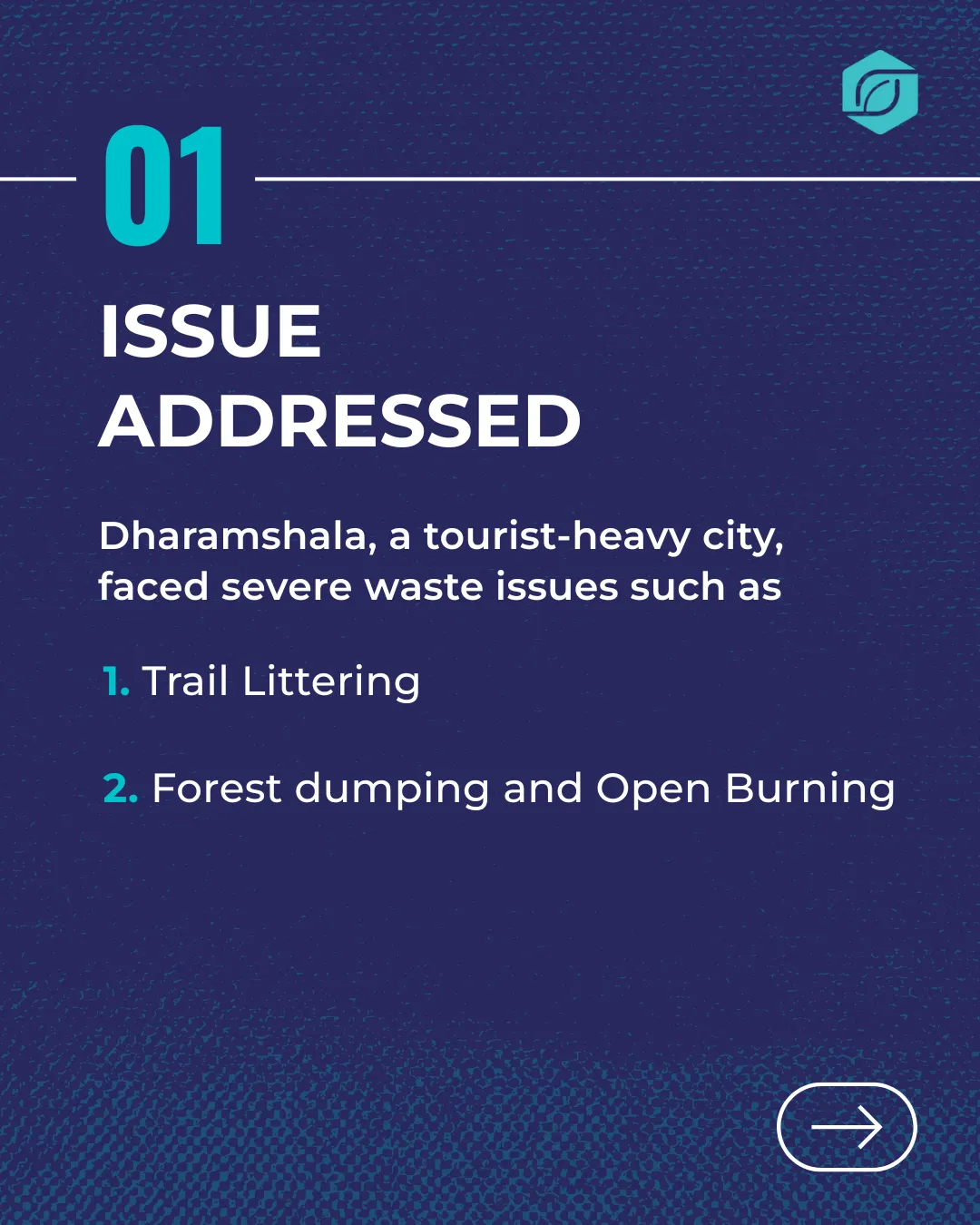
- Trail littering across a tourist-heavy, ecologically sensitive city.
- Forest dumping and open burning of waste — directly harming the Himalayan environment.
- No source segregation at the household level in the target wards (a 0% baseline).
WWS’s programme needed an objective, evidence-based evaluation: had the model-ward interventions genuinely shifted household behaviour, diverted waste from landfill and improved worker livelihoods — and what would it take to sustain those gains? Social Lab’s study set out to answer that across the programme’s four pillars.
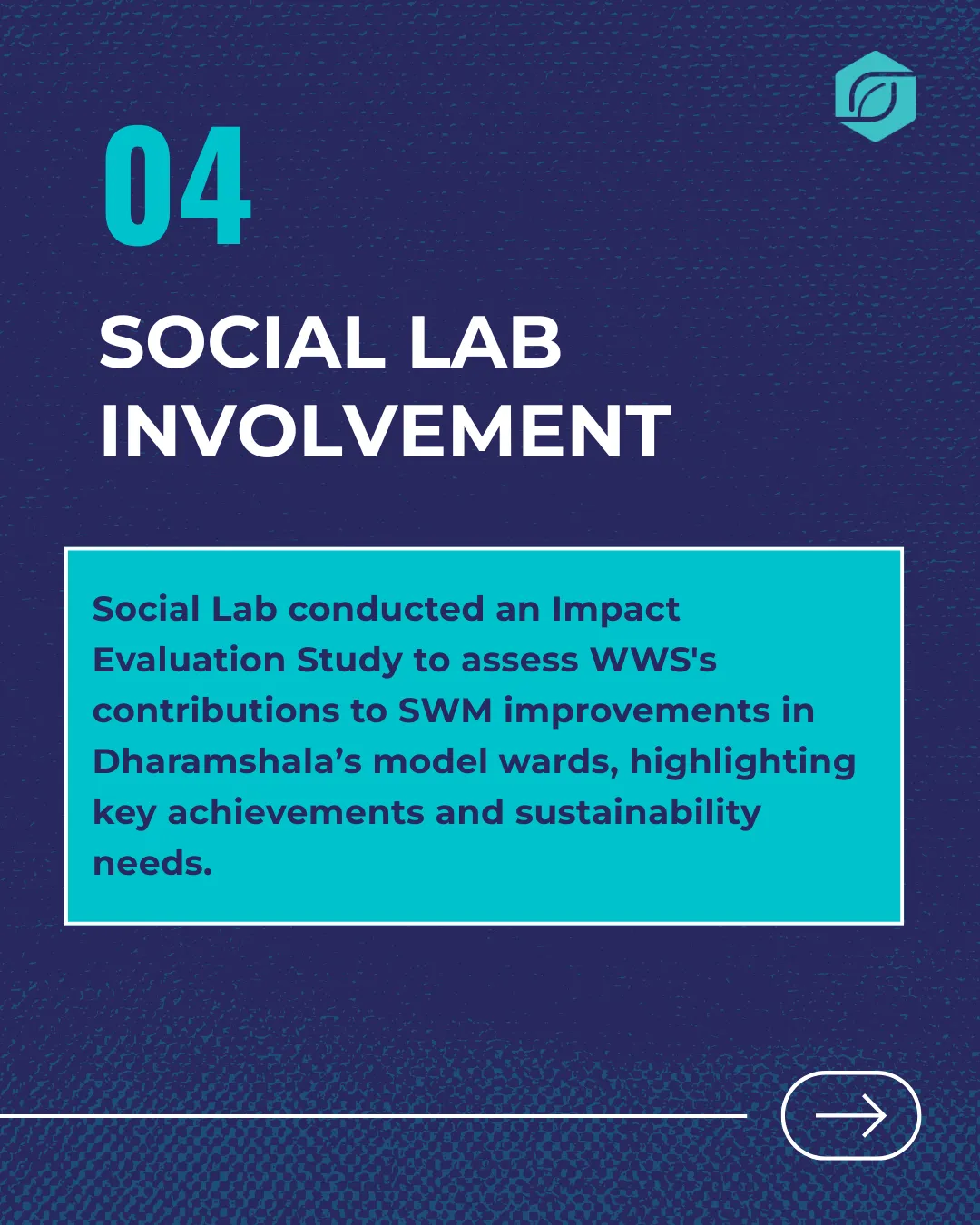
Social Lab conducted the Impact Evaluation Study — independently assessing WWS’s contribution to SWM improvements in Dharamshala’s model wards, quantifying outcomes across awareness, segregation, waste diversion and worker welfare, and highlighting the sustainability needs for the next phase.
The programme’s approach
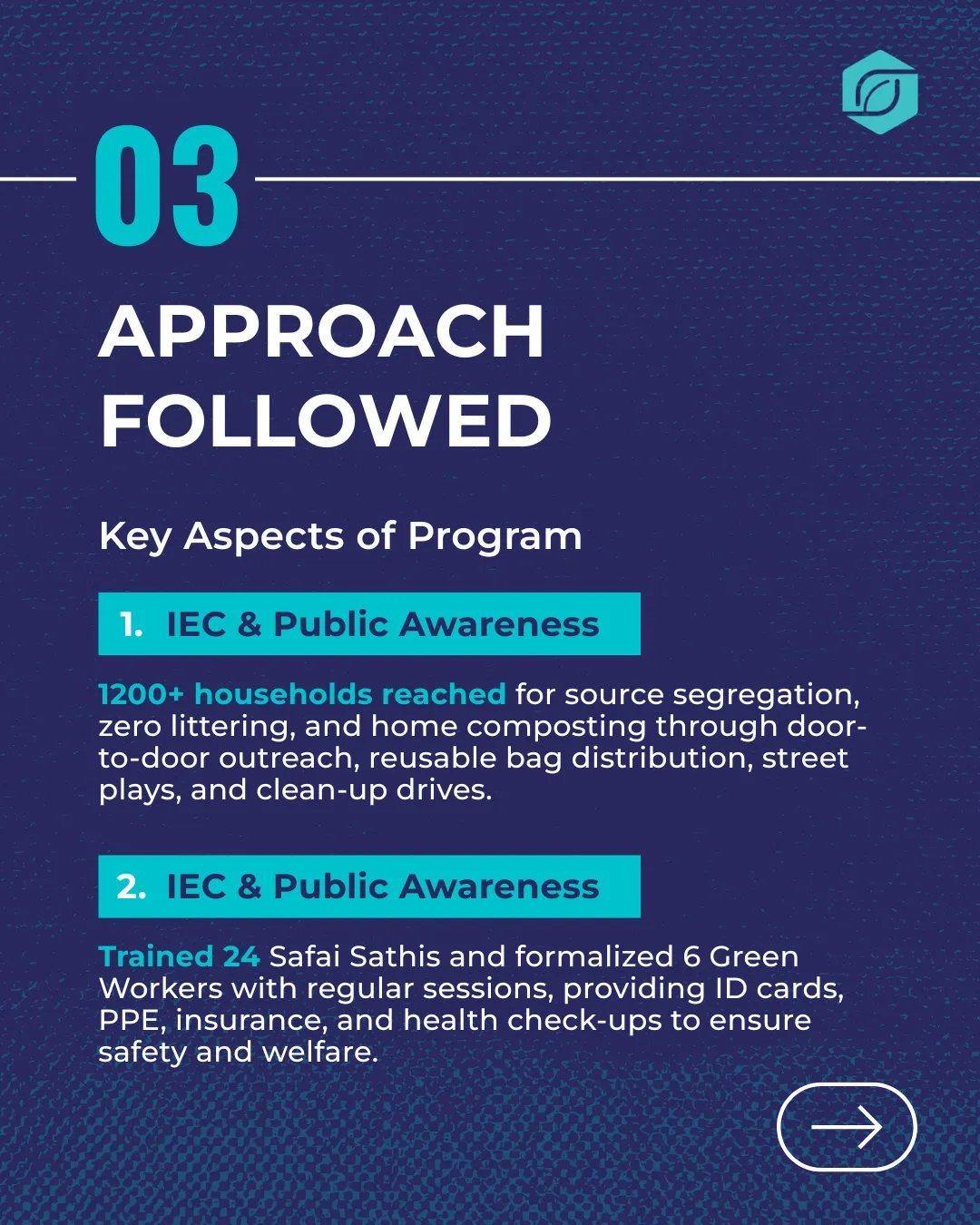
1,200+ households reached for source segregation, zero littering and home composting — through door-to-door outreach, reusable-bag distribution, street plays and clean-up drives.
24 Safai Sathis trained and 6 Green Workers formalised through regular sessions, with ID cards, PPE, insurance and health check-ups to protect their safety and welfare.
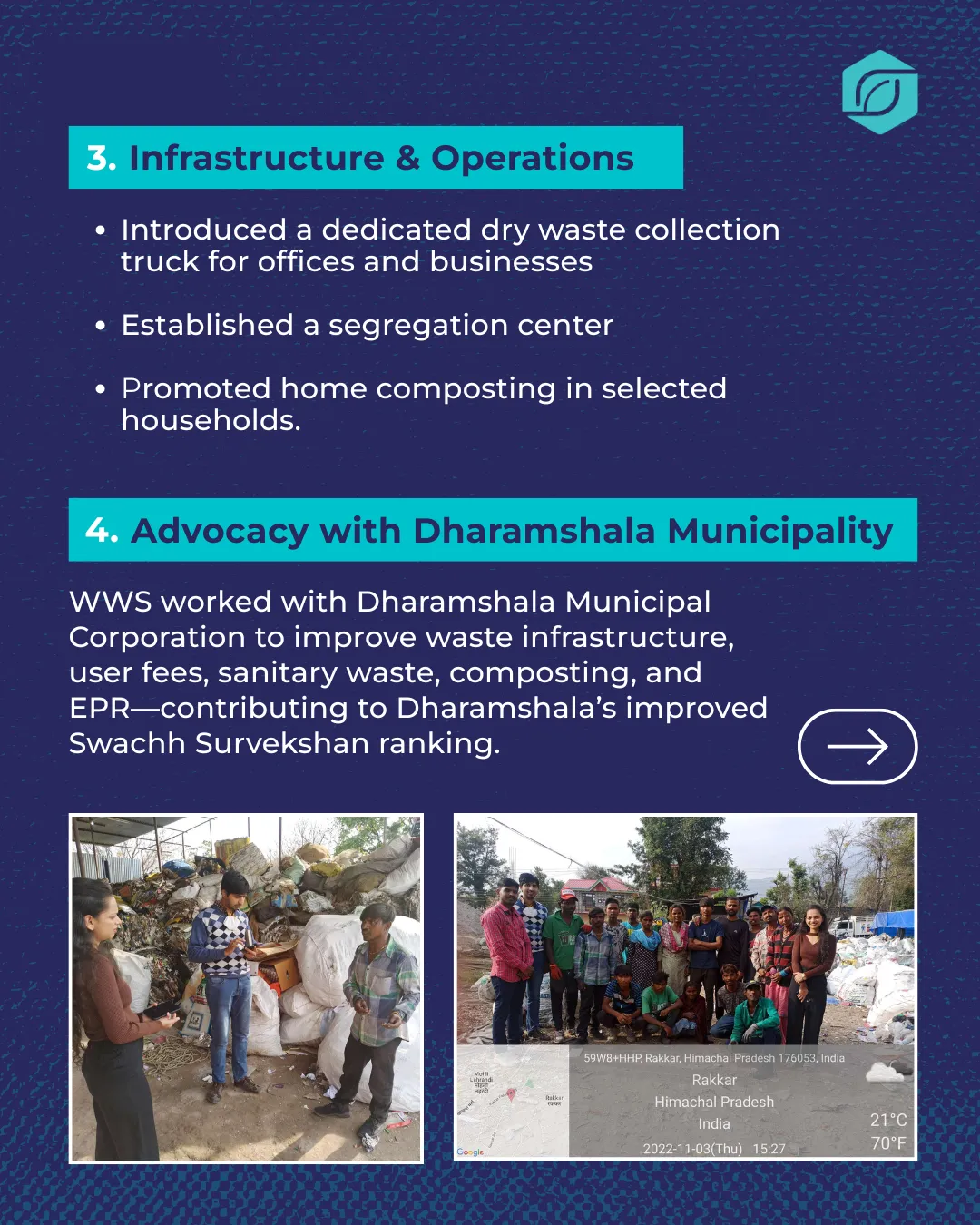
A dedicated dry-waste collection truck introduced for offices and businesses, a segregation centre established, and home composting promoted in selected households.
WWS worked with Dharamshala Municipal Corporation on waste infrastructure, user fees, sanitary waste, composting and EPR — feeding directly into the city’s improved Swachh Survekshan ranking.
Results
What we learned
- An integrated model — societal behaviour change, operational infrastructure and municipal governance together — moved the ranking needle far faster than any single intervention.
- Formalising waste workers (ID cards, PPE, insurance, a 22% income hike) is both a welfare win and the engine of better household segregation.
- Sustaining the gains depends on the municipality institutionalising user fees, EPR and composting beyond the programme’s model wards.
The evaluation confirmed that Dharamshala’s model wards delivered measurable, compounding gains — and mapped the governance steps needed to scale them city-wide.
Related case studies
Not sure which EPR applies to you?
Check your applicability free in 60 seconds, or talk to our compliance team.
Or call +91 95942 59275 · [email protected]