
Building a Net-Zero, Climate-Resilient Mandede Village
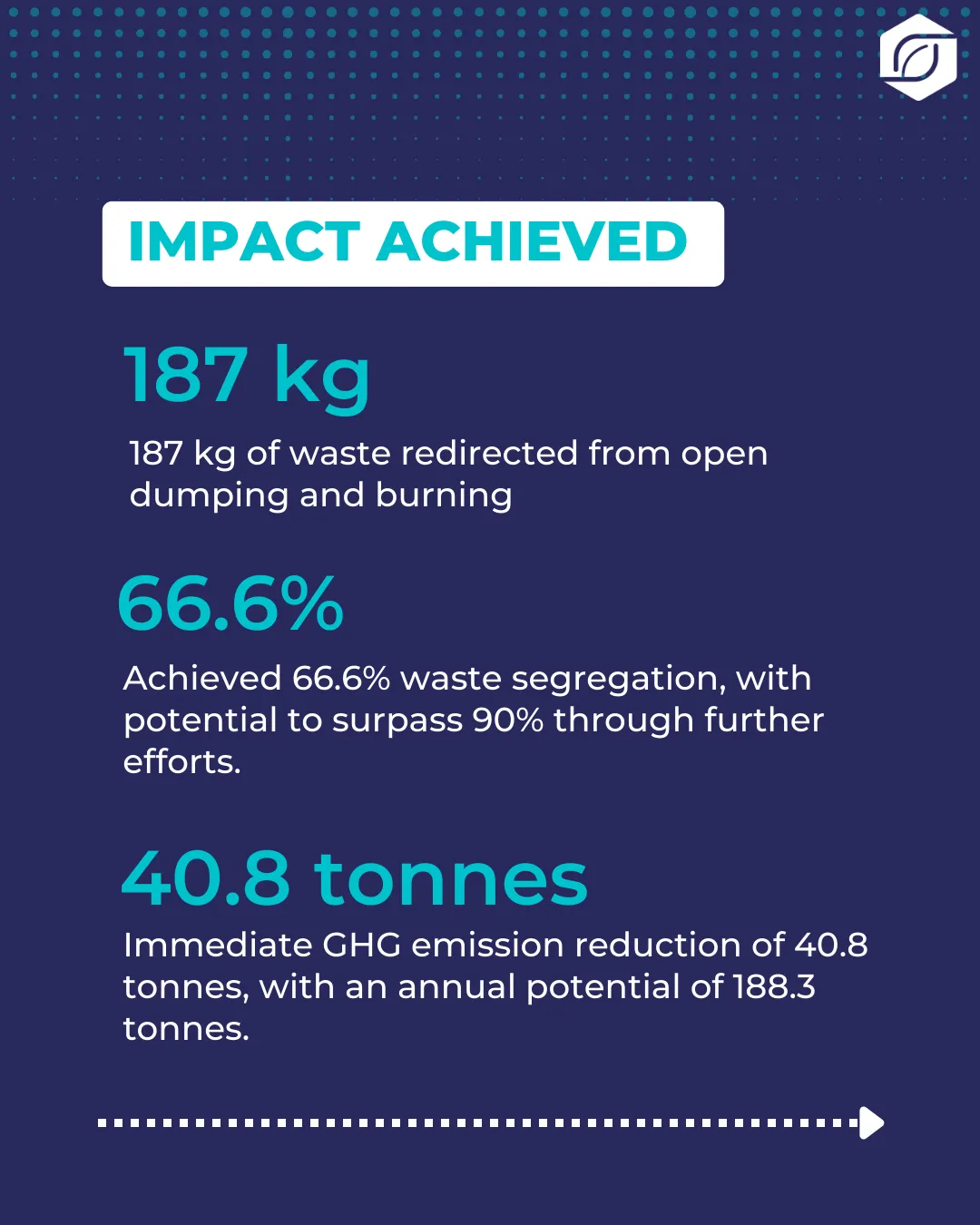
Source segregation, upcycled-plastic infrastructure and composting cut 40.8 tonnes of GHG emissions.
Overview. In Mandede village (Taluka Mulashi, Pune), Social Lab worked toward net zero and climate resilience — reaching 66.6% source segregation and reducing 40.8 tonnes of GHG emissions in three months, with a yearly reduction potential of 188.3 tonnes.
Project story
Swipe through the project as we published it — real slides from the field.

The problem
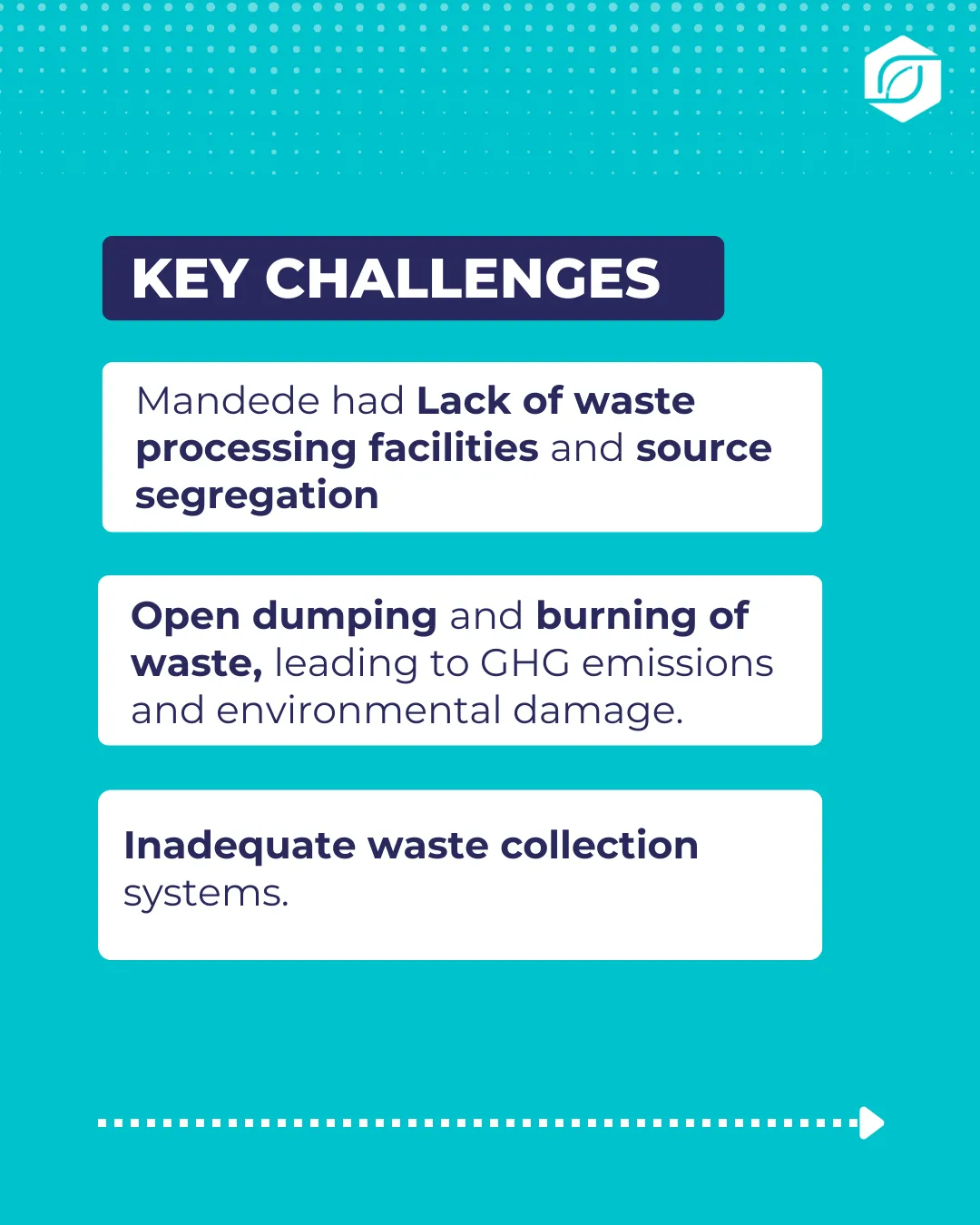
- No waste-processing facilities and no source segregation in the village.
- Open dumping and burning of waste — directly generating GHG emissions and environmental damage.
- Inadequate waste-collection systems.
The village had no source segregation, lacked waste collection and processing, and relied on open dumping and waste burning — directly generating GHG emissions and undermining climate resilience.
Social Lab applied its expertise in reducing GHG emissions through scientific waste management, and in promoting climate-resilient agriculture by turning wet waste into compost — then quantified the village’s emissions reduction.
The programme’s approach
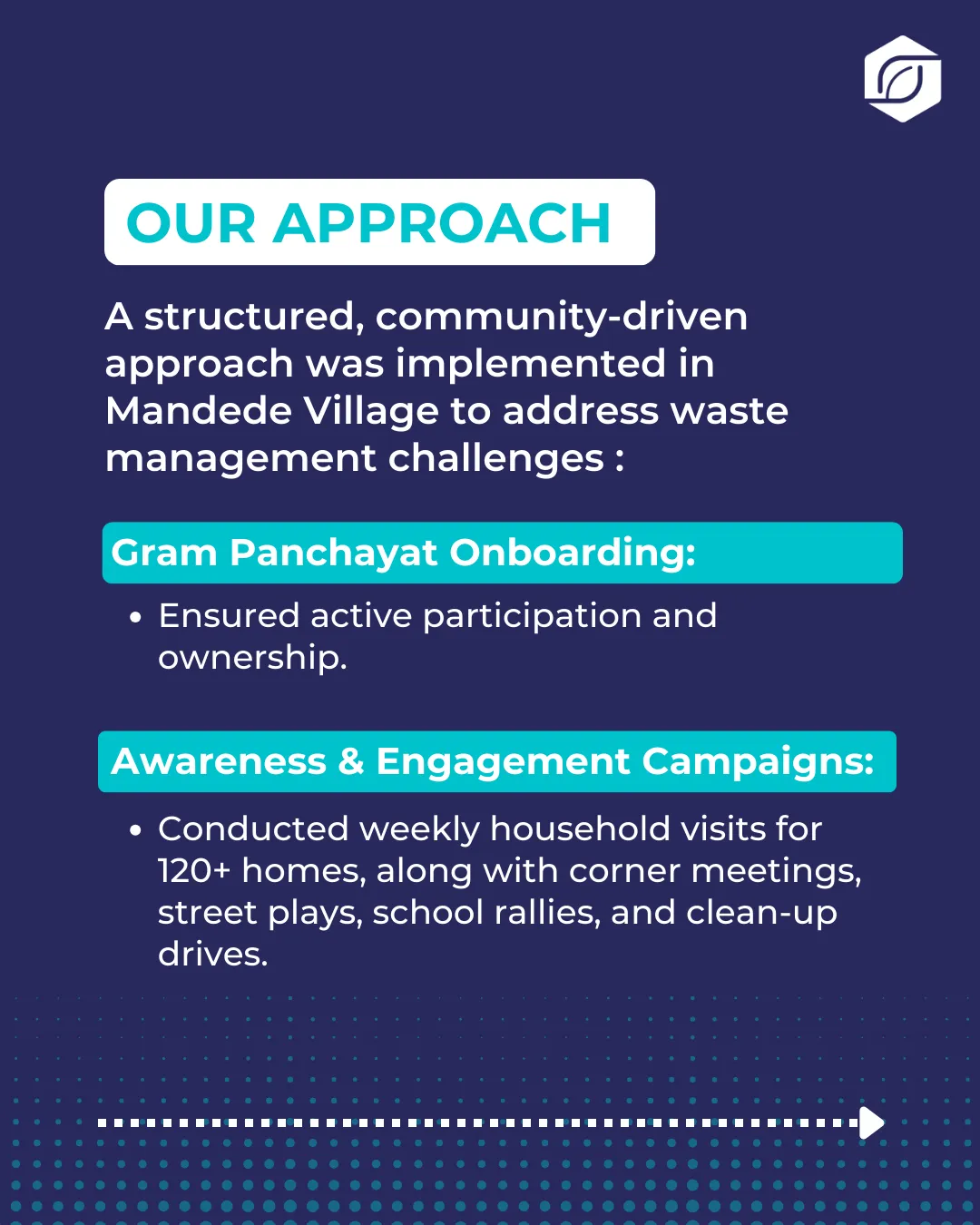
Securing the participation and ownership of the Gram Panchayat from the start.
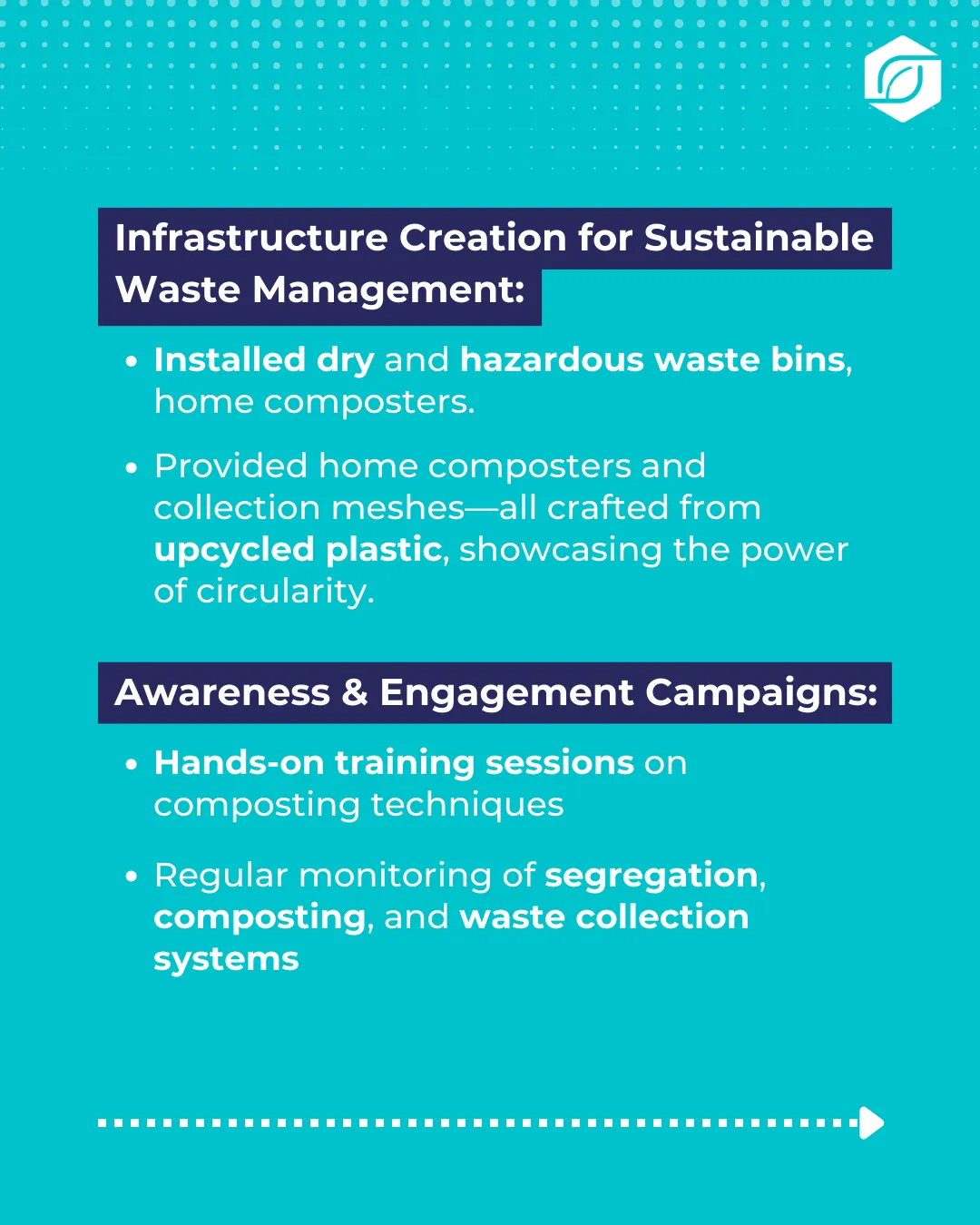
Household-level engagement covering all 120 households at least weekly, plus community engagement via corner meetings, school rallies, street plays and clean-up drives.
Dry- and hazardous-waste dustbins, home composters, community collection mesh and containers — all made from upcycled plastic paint buckets, demonstrating resource circularity.
Training on composter operations, plus ongoing monitoring of segregation bins, collection containers and composters.
Results
Sustainability is anchored by extended monitoring, an MOU with the Paudgaon processing plant to streamline collection, and ongoing supervision by the Gram Panchayat.
Related case studies
Not sure which EPR applies to you?
Check your applicability free in 60 seconds, or talk to our compliance team.
Or call +91 95942 59275 · [email protected]