
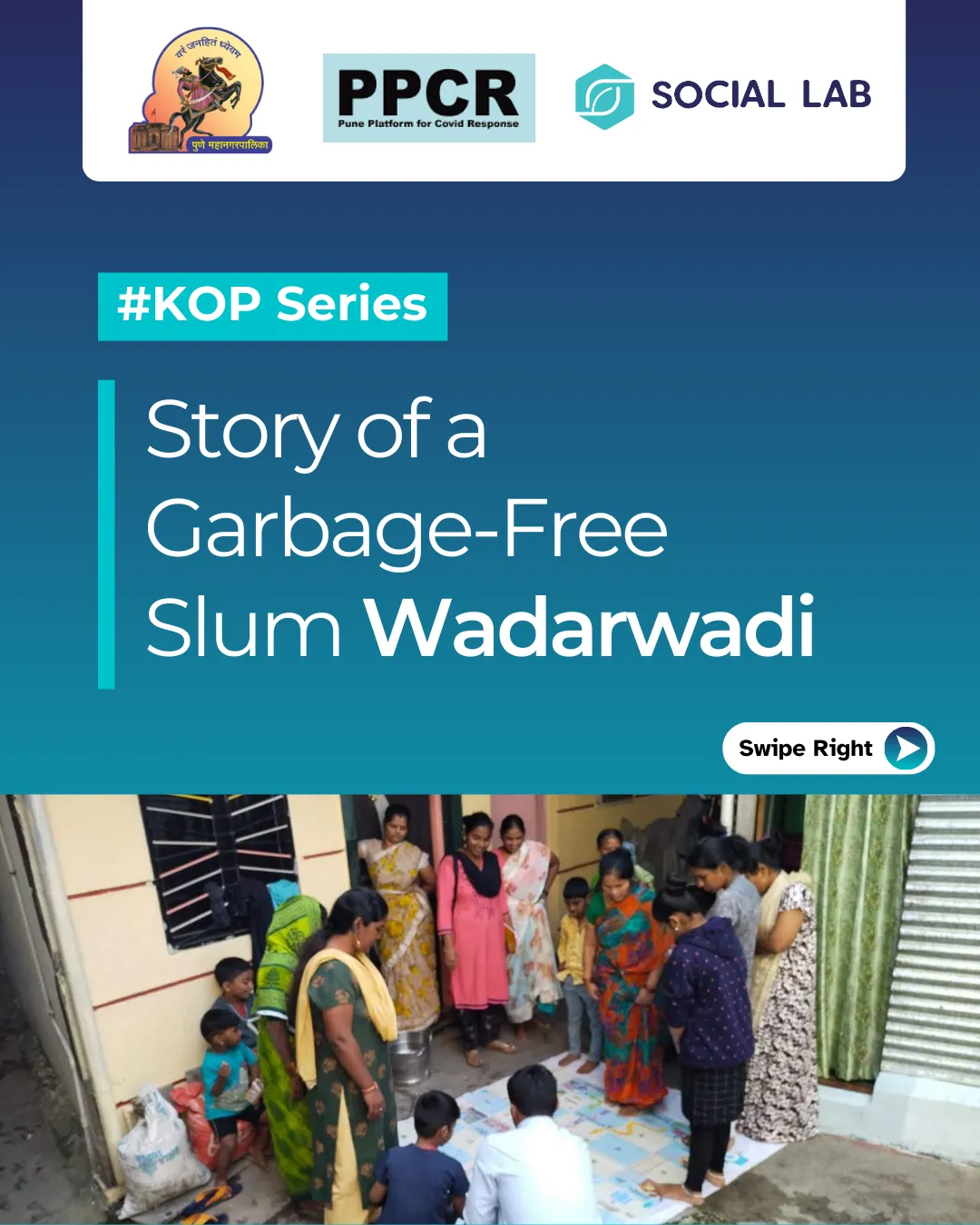
Creating a Garbage-Free Slum in Wadarwadi
A 3-month pilot that took daily waste collection from 18% to 82% in a dense Pune slum.
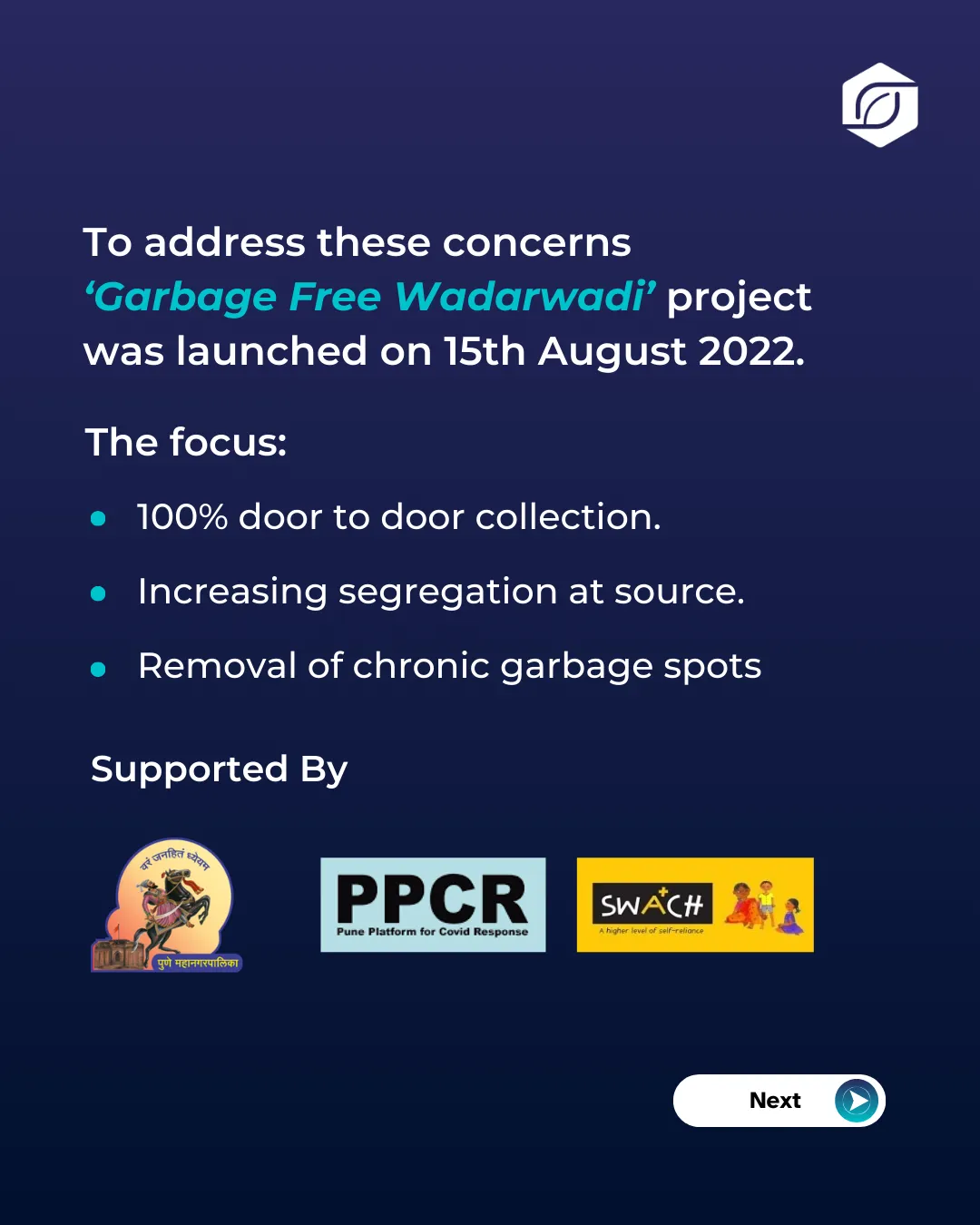
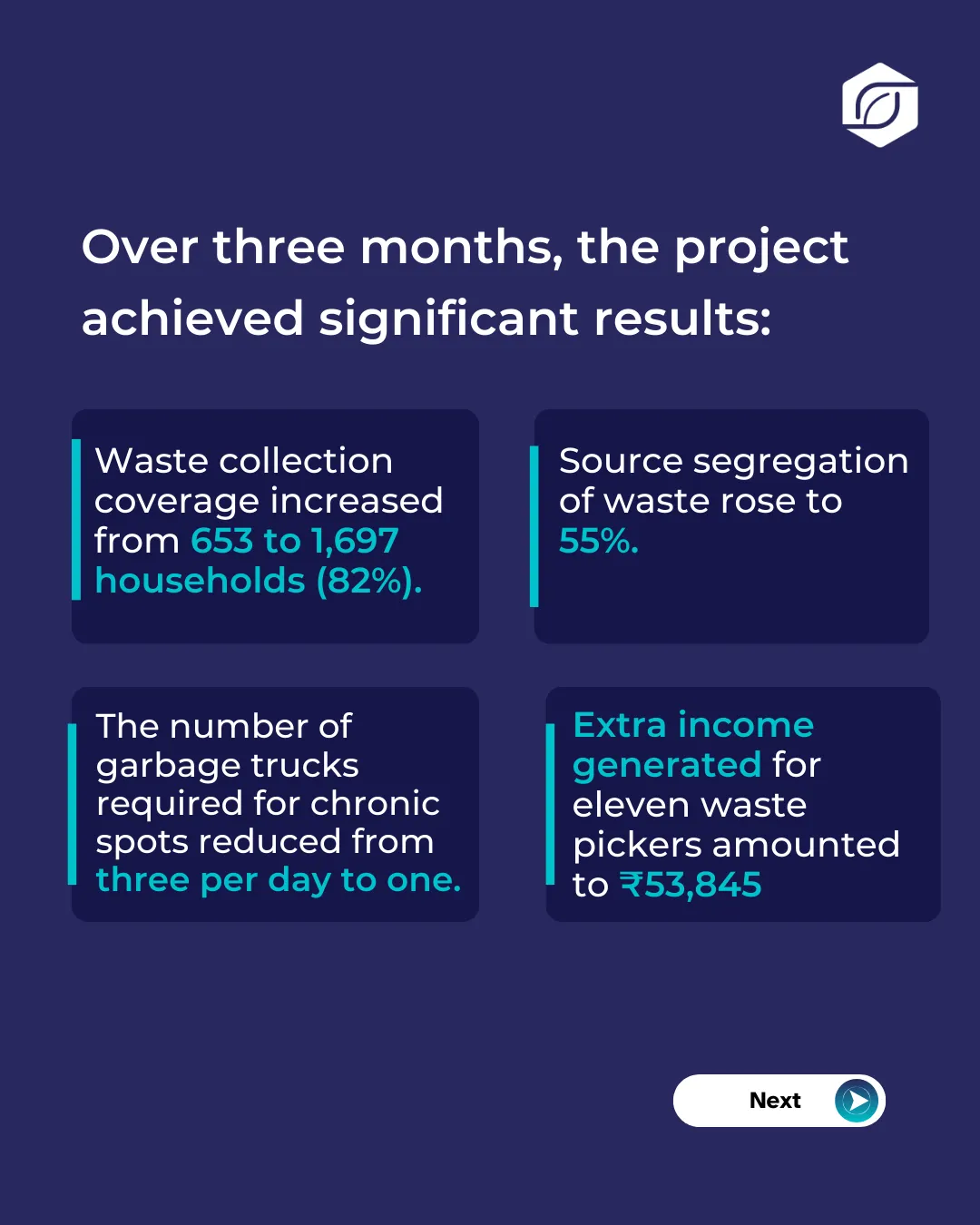
Overview. In Wadarwadi, a densely populated slum under Pune’s Shivajinagar ward, Social Lab, PMC and PPCR ran the “Garbage-Free Wadarwadi” pilot — lifting waste collection from 18% to 82% and clearing all three chronic garbage spots in three months.
Project story
Swipe through the project as we published it — real slides from the field.
The problem
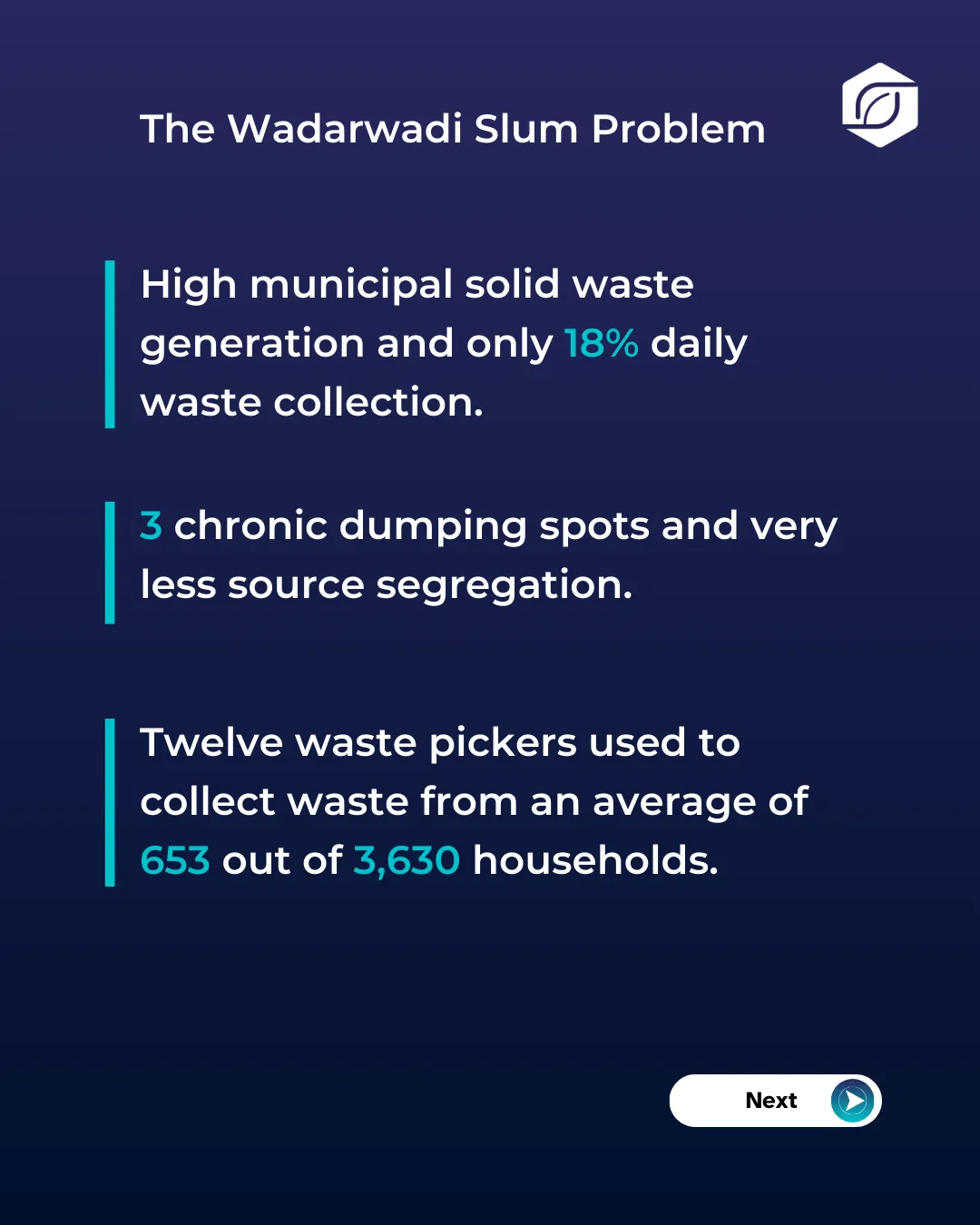
- High municipal solid waste generation, with only ~18% of waste collected daily.
- Three chronic dumping spots and very little segregation at source.
- Just 12 waste pickers serving an average of 653 of Wadarwadi’s 3,630 households.
Only 18% of waste was being collected daily, there was no real source segregation, and three chronic garbage spots persisted. Twelve waste pickers were collecting from an average of just 653 of Wadarwadi’s 3,630 households.
The programme’s approach
A baseline study of the existing SWM system quantified the problem and identified the actions needed to improve it.
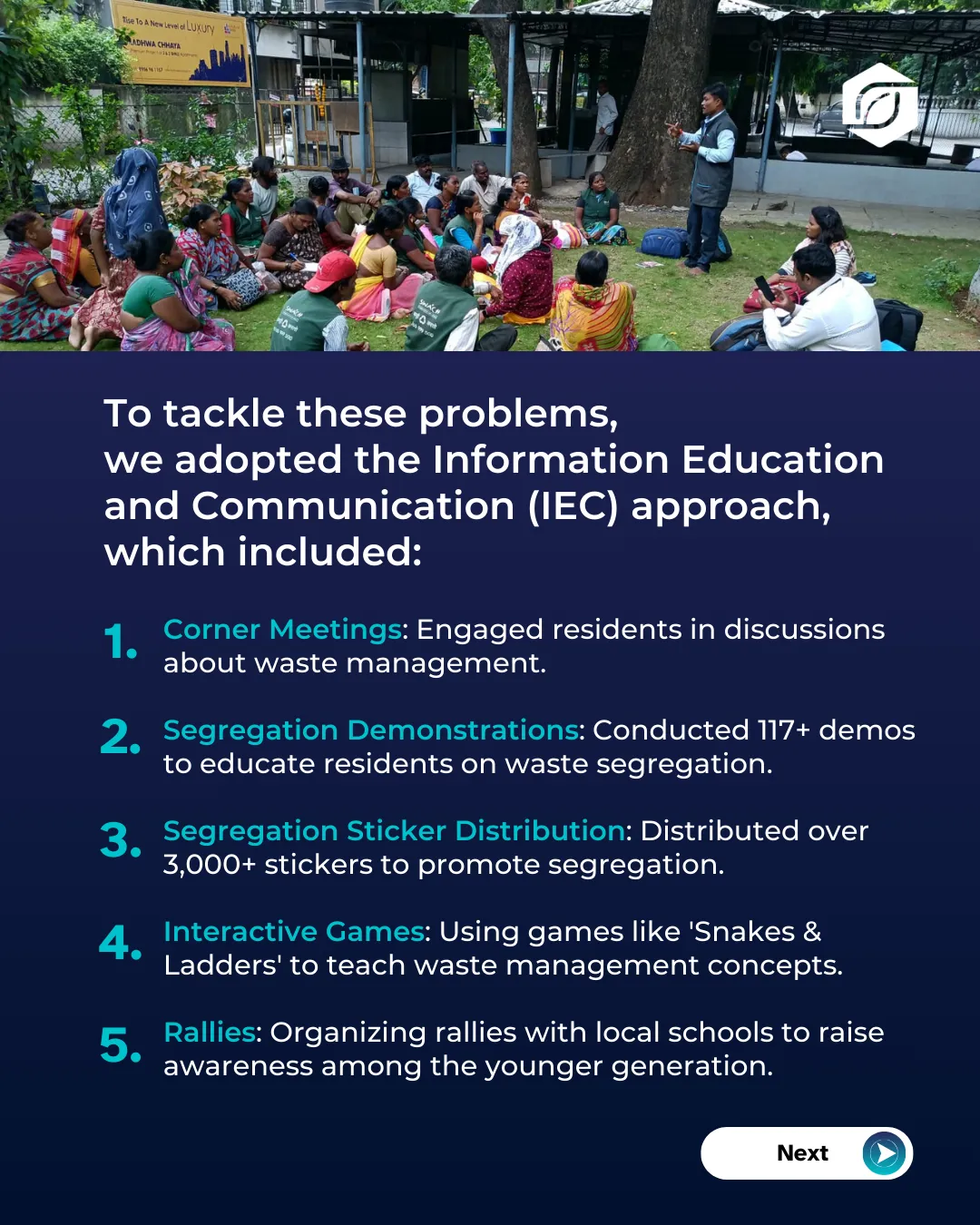
An Information, Education & Communication approach built awareness on waste classification, disposal hazards and segregation through corner meetings, segregation demos and sticker distribution.
Interactive games like “Snakes & Ladders” used real-life situations to teach collection & segregation; rallies were held with two local schools to reach the younger generation.
Over three months, 100% of households were monitored daily, 117 segregation demos were completed, 3,000+ segregation stickers were distributed, and collection routes were optimised.
Results
The project ended on 15 Nov 2022, but residents continued to manage waste responsibly — seeing visible cleanliness, they sustained the effort. The model can be scaled and replicated in other settlements.
Related case studies
Not sure which EPR applies to you?
Check your applicability free in 60 seconds, or talk to our compliance team.
Or call +91 95942 59275 · [email protected]