Plastic Circular Cities — Nagpur
Assessing SWM operations, waste quantum and stakeholders to find intervention areas.
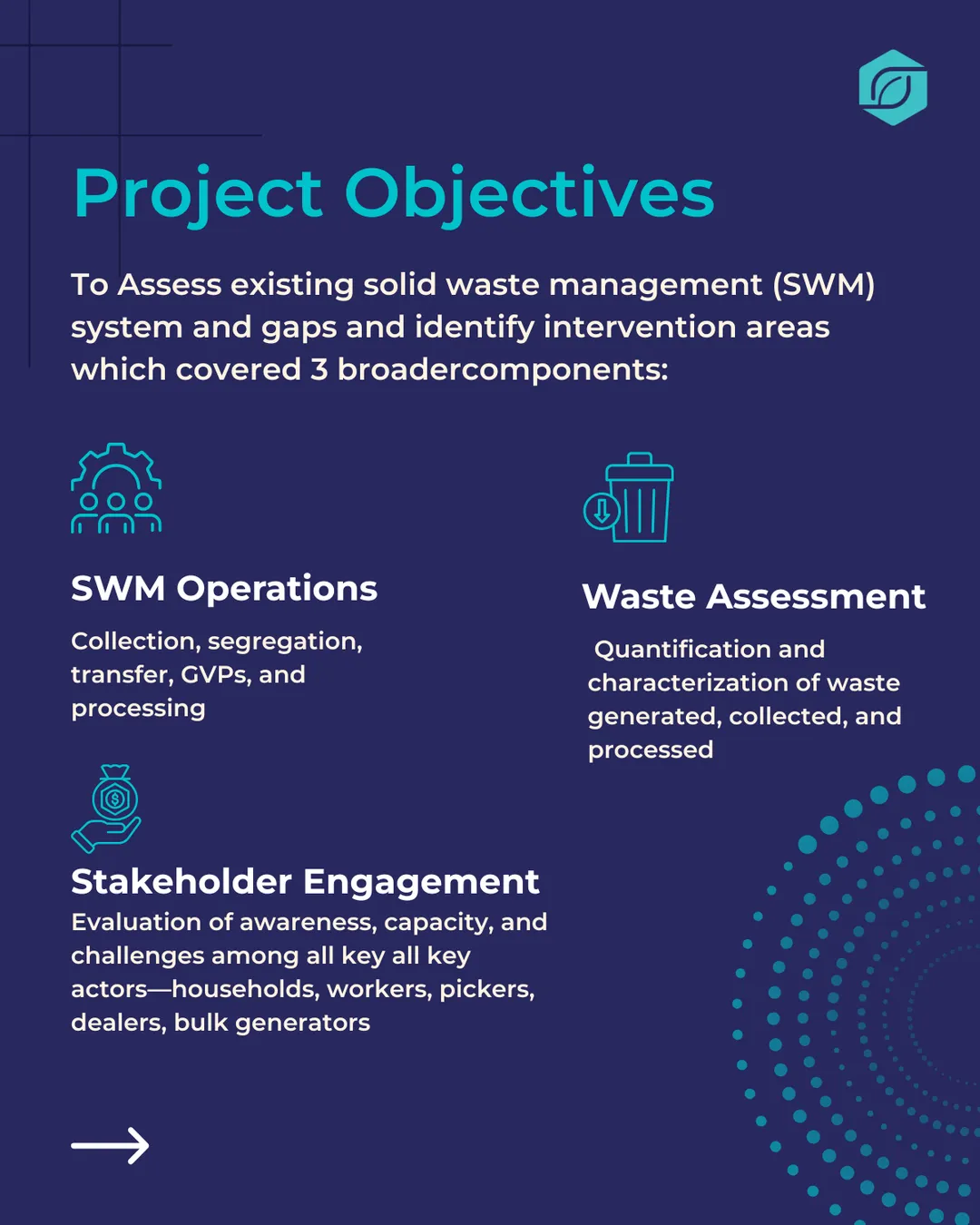
Overview. For the Plastic Circular Cities Project in Nagpur, Social Lab (with sampurnEarth and the India Sanitation Coalition) assessed the existing SWM system across three components — operations, waste assessment and stakeholder engagement — to identify intervention areas for inclusive, resilient waste ecosystems.
Project story
Swipe through the project as we published it — real slides from the field.
Background
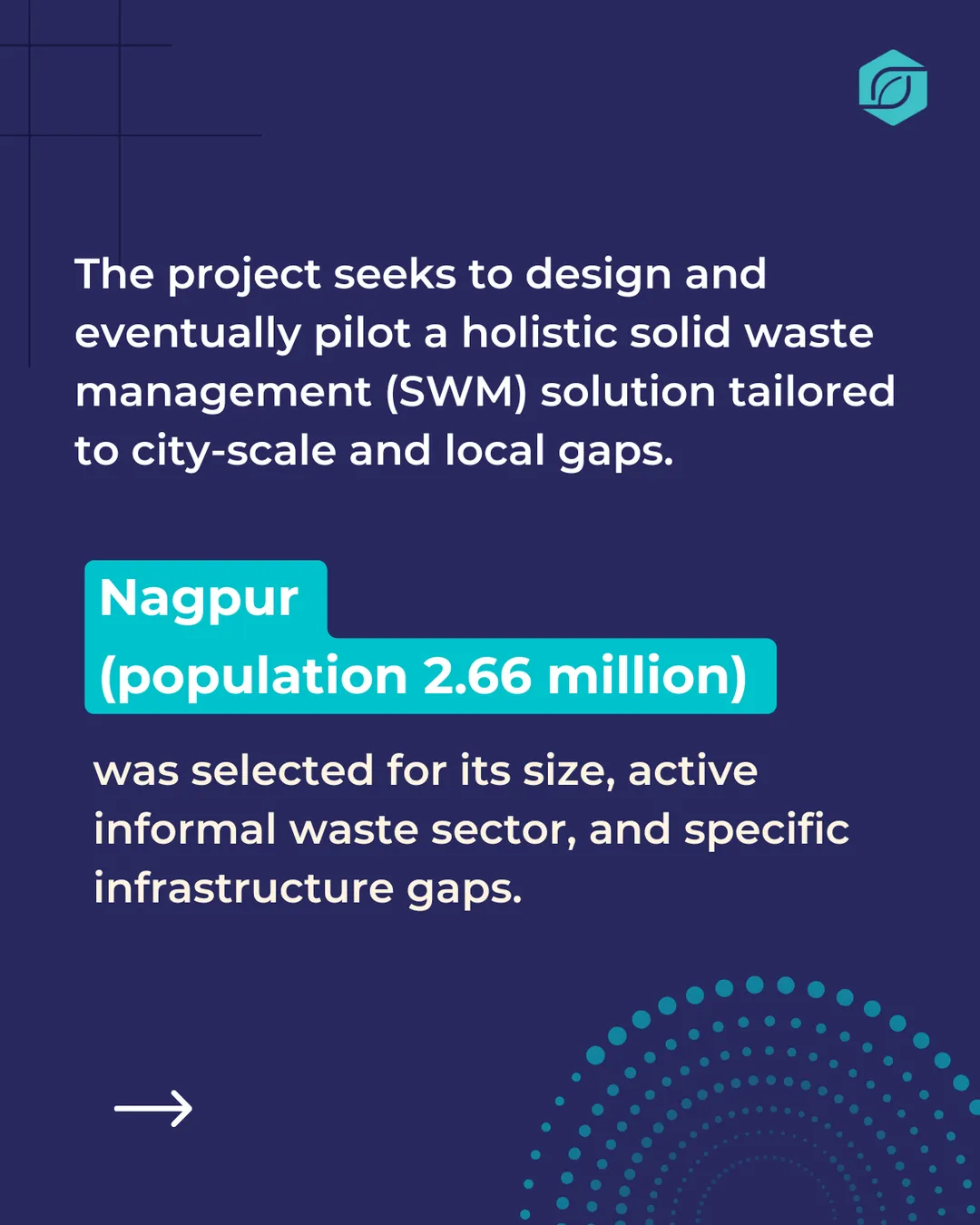
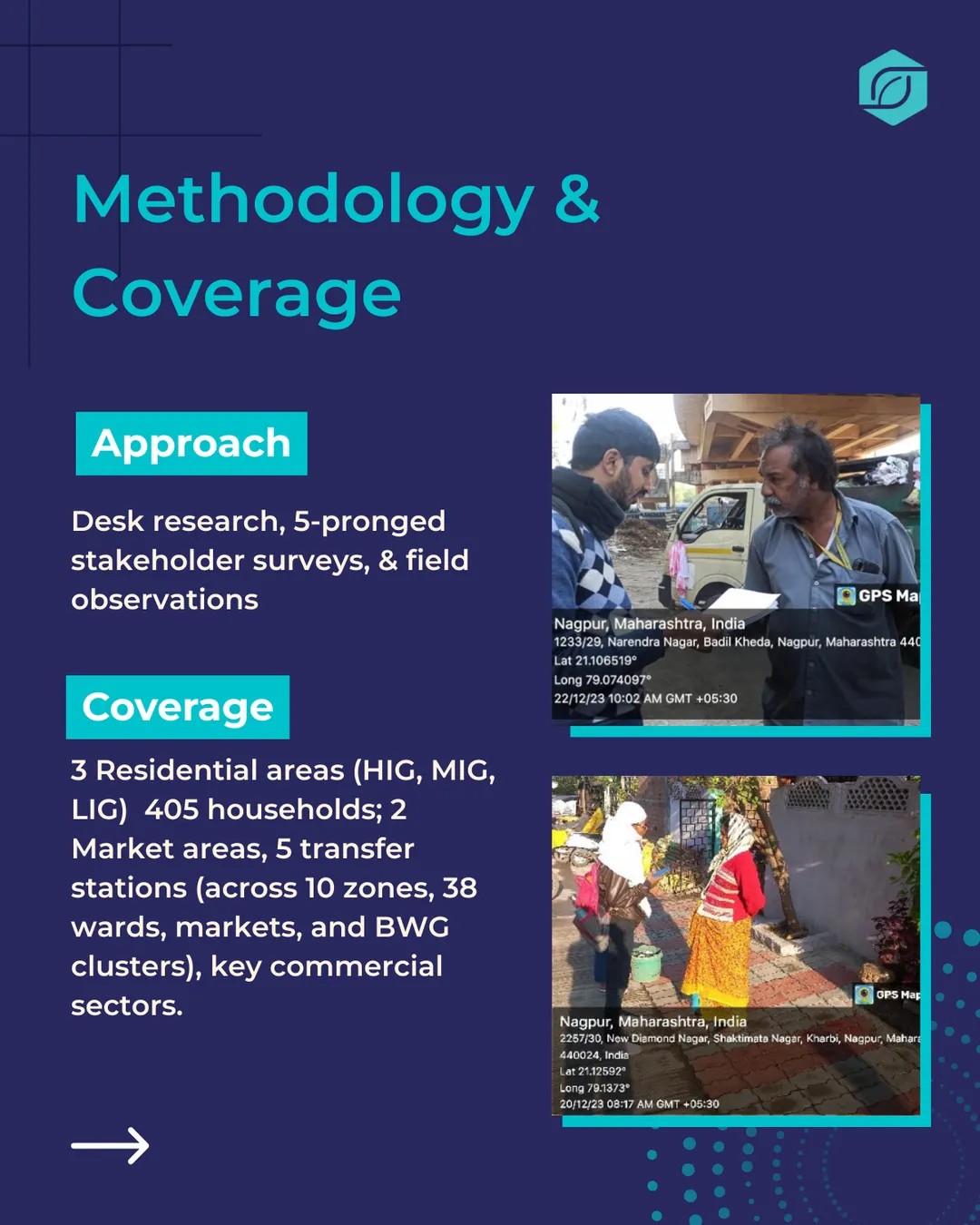
Nagpur (population ~2.66 million) was selected for its scale, its active informal waste sector and specific infrastructure gaps. With sampurnEarth and the India Sanitation Coalition, Social Lab assessed the existing SWM system across operations, waste quantum and stakeholders — surveying 405 households (HIG/MIG/LIG), two market areas and five transfer stations across 10 zones and 38 wards — to design a holistic, city-scale SWM solution.
The challenge
To advance inclusive and resilient waste ecosystems, Nagpur needed a clear picture of its SWM system, the quantum and characterisation of its waste, and the awareness and capacity of every key actor.
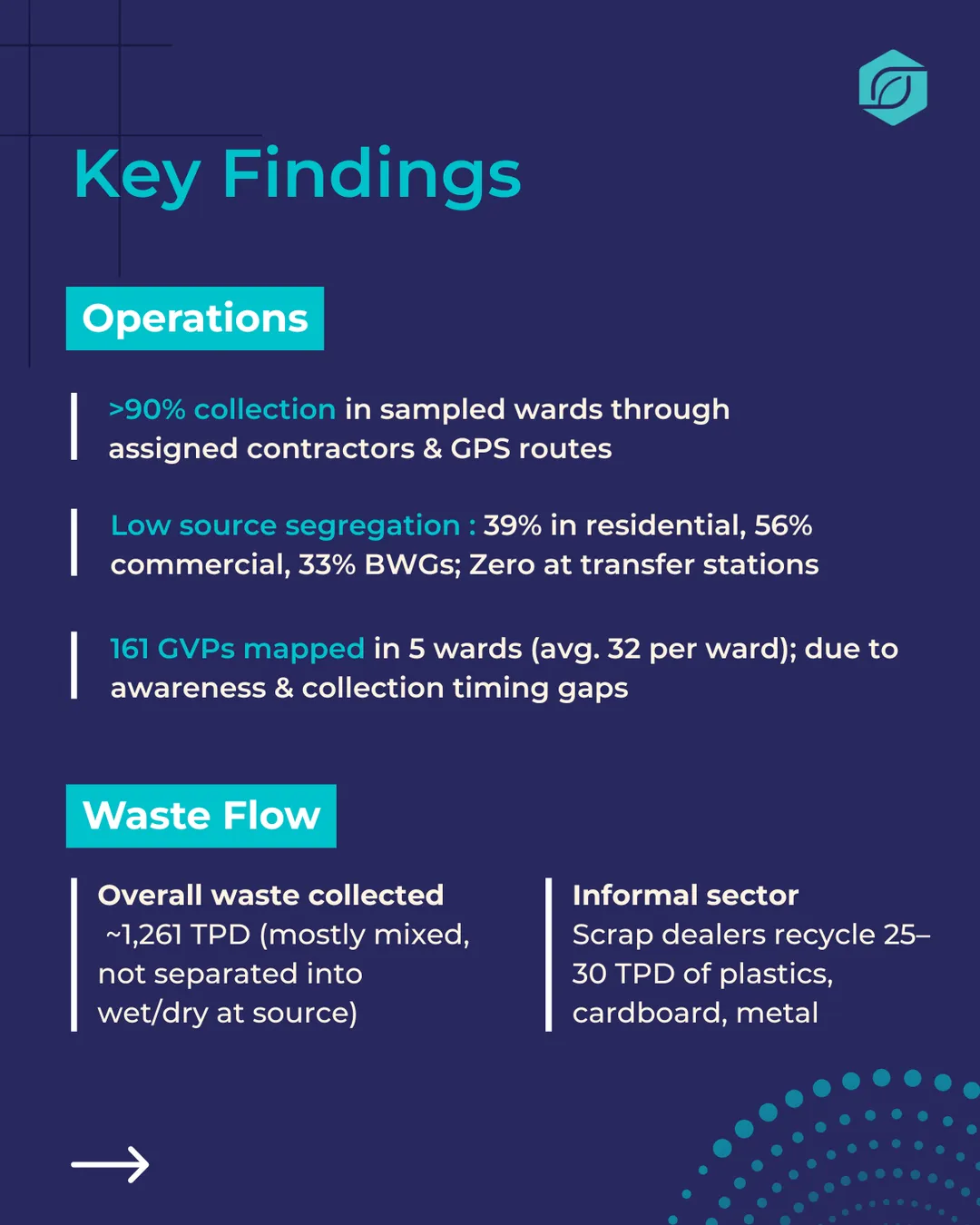
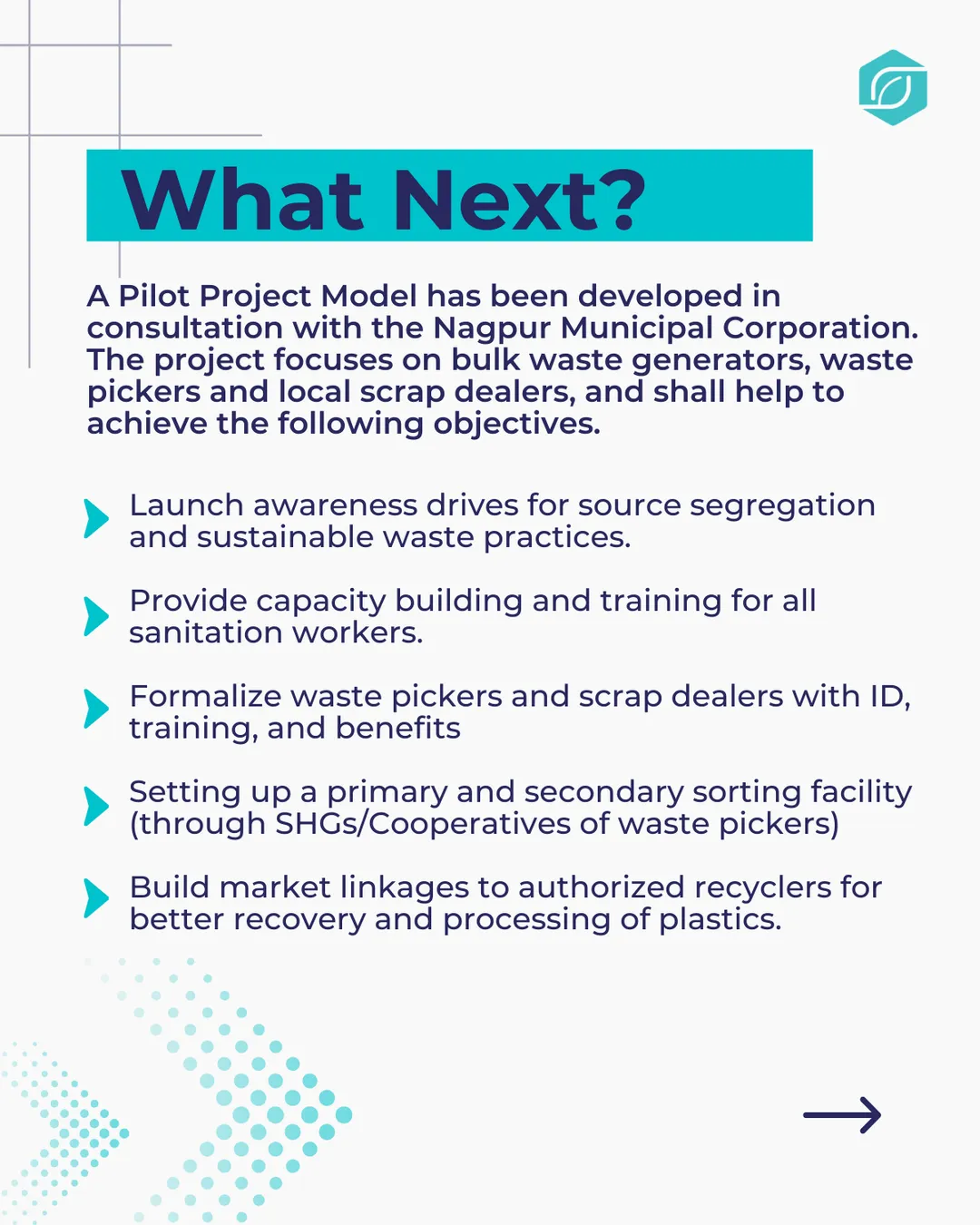
Social Lab ran the assessment — desk research, a five-pronged stakeholder survey and field observations — quantifying collection, segregation, GVPs and waste flow, then framed a pilot model in consultation with Nagpur Municipal Corporation.
Our approach
Assessing collection, segregation, transfer, GVPs and processing.
Quantifying and characterising waste generated, collected and processed.
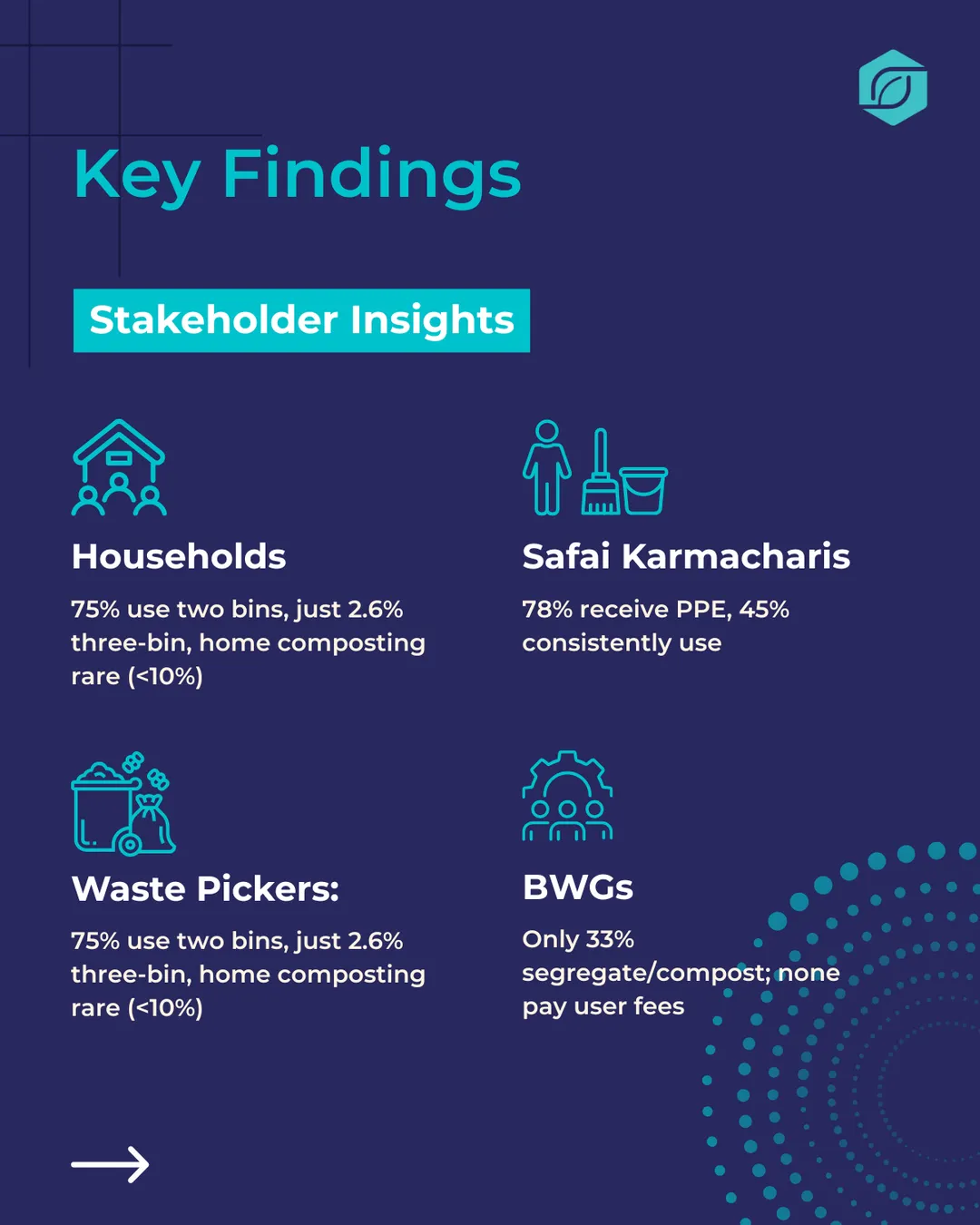
Evaluating awareness, capacity and challenges among households, workers, pickers, dealers and bulk generators.
Results
What we learned
- Launch awareness drives for source segregation and sustainable waste practices.
- Provide capacity building and training for all sanitation workers.
- Formalise waste pickers and scrap dealers with ID, training and benefits.
- Set up primary and secondary sorting facilities through SHGs / cooperatives of waste pickers.
- Build market linkages to authorised recyclers for better plastic recovery and processing.
Related case studies
Not sure which EPR applies to you?
Check your applicability free in 60 seconds, or talk to our compliance team.
Or call +91 95942 59275 · [email protected]