Plastic Circular Cities — Nashik
A 769-stakeholder baseline to build an inclusive, resilient waste ecosystem.
Overview. For the Plastic Circular Cities Project in Nashik, Social Lab (with sampurnEarth and the India Sanitation Coalition) surveyed 769 stakeholders across two city zones to map the waste ecosystem and inform an inclusive, resilient plastic-circularity strategy.
Project story
Swipe through the project as we published it — real slides from the field.
The challenge
Building an inclusive, resilient waste ecosystem in Nashik required a comprehensive understanding of every actor in the plastic value chain — from households to waste pickers, scrap dealers and bulk generators.
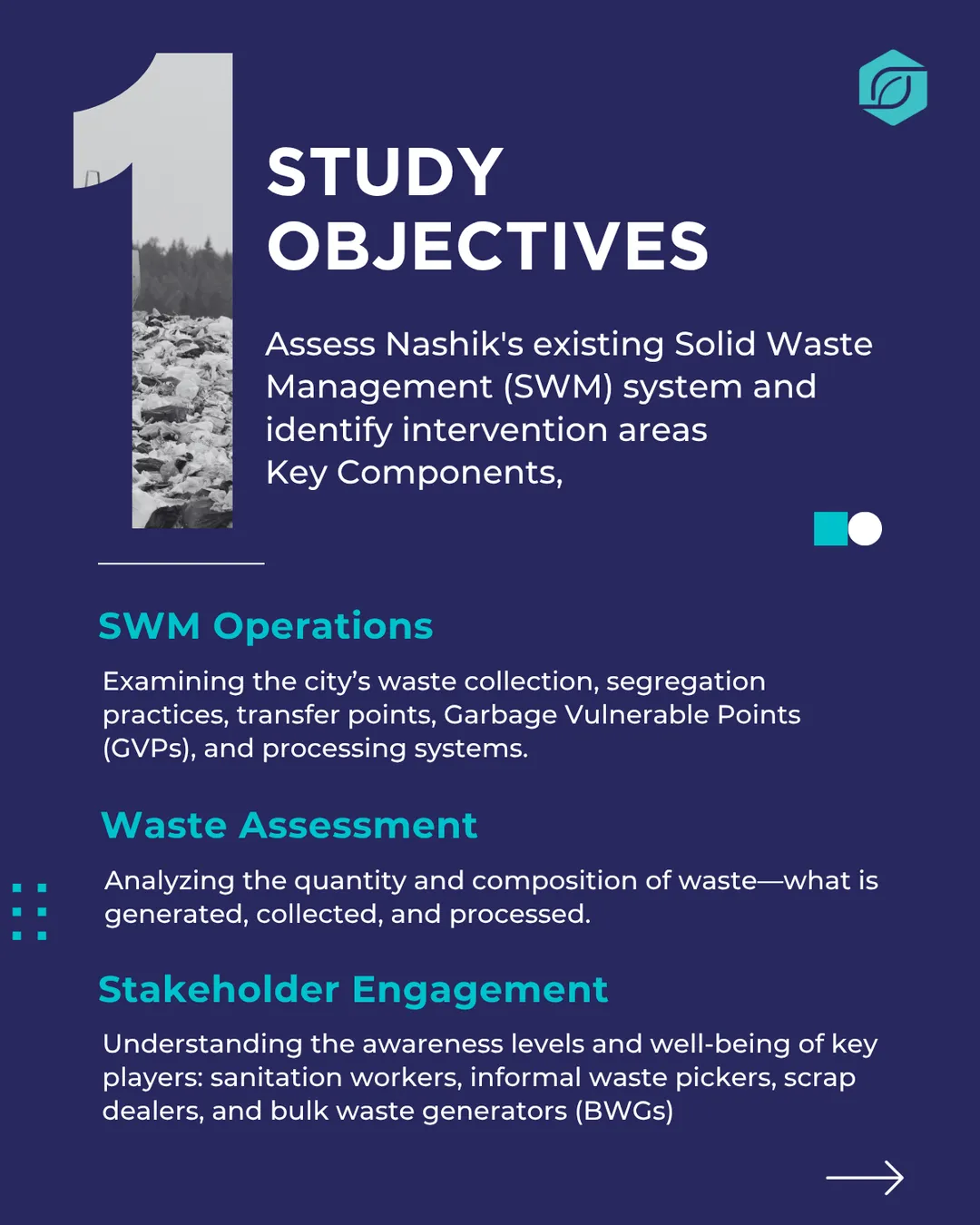
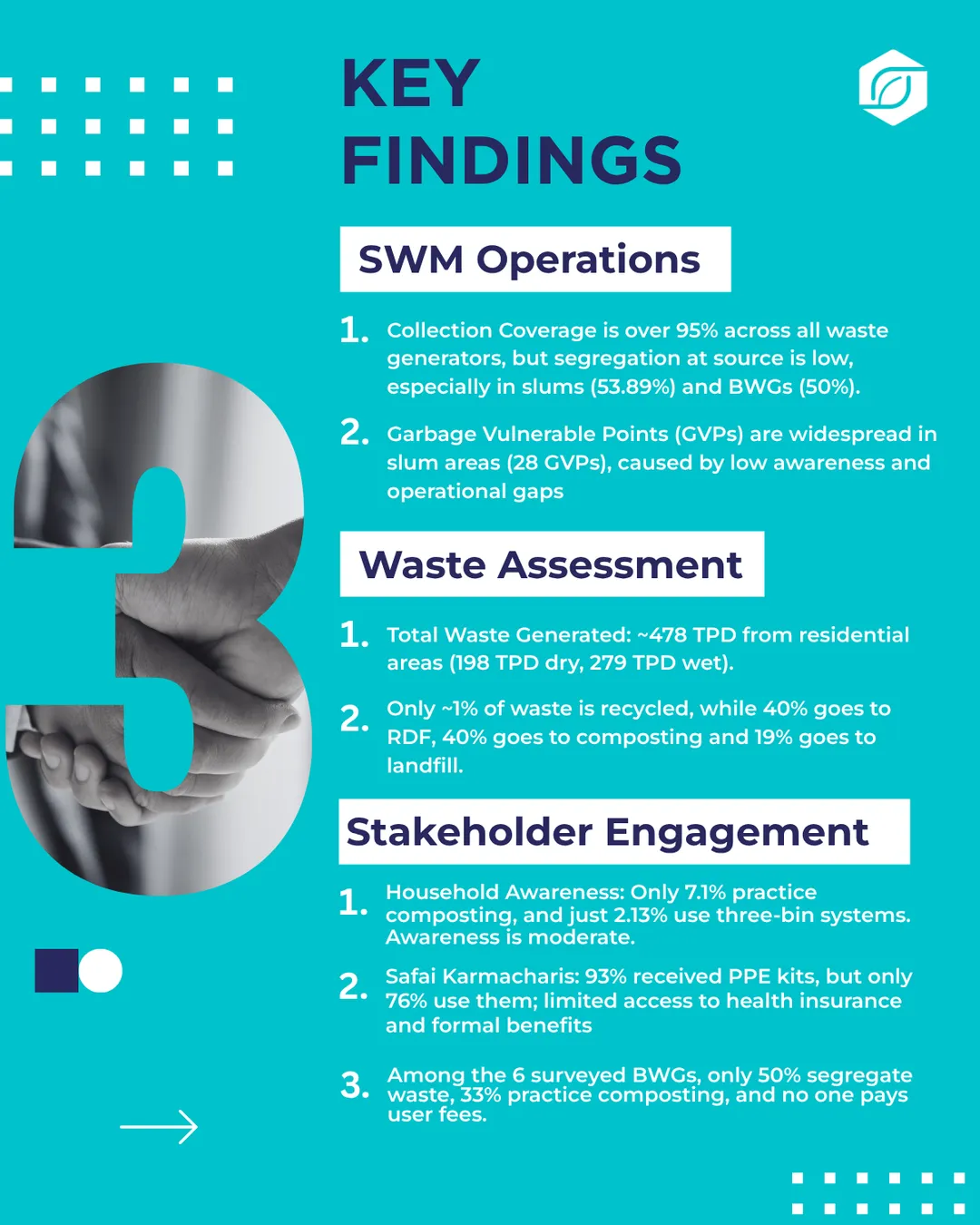
Social Lab assessed Nashik’s existing SWM system and gaps across three components — operations, waste quantum, and stakeholders — surveying 769 people across the value chain to define intervention areas for an inclusive, resilient plastic-circularity strategy.
Our approach
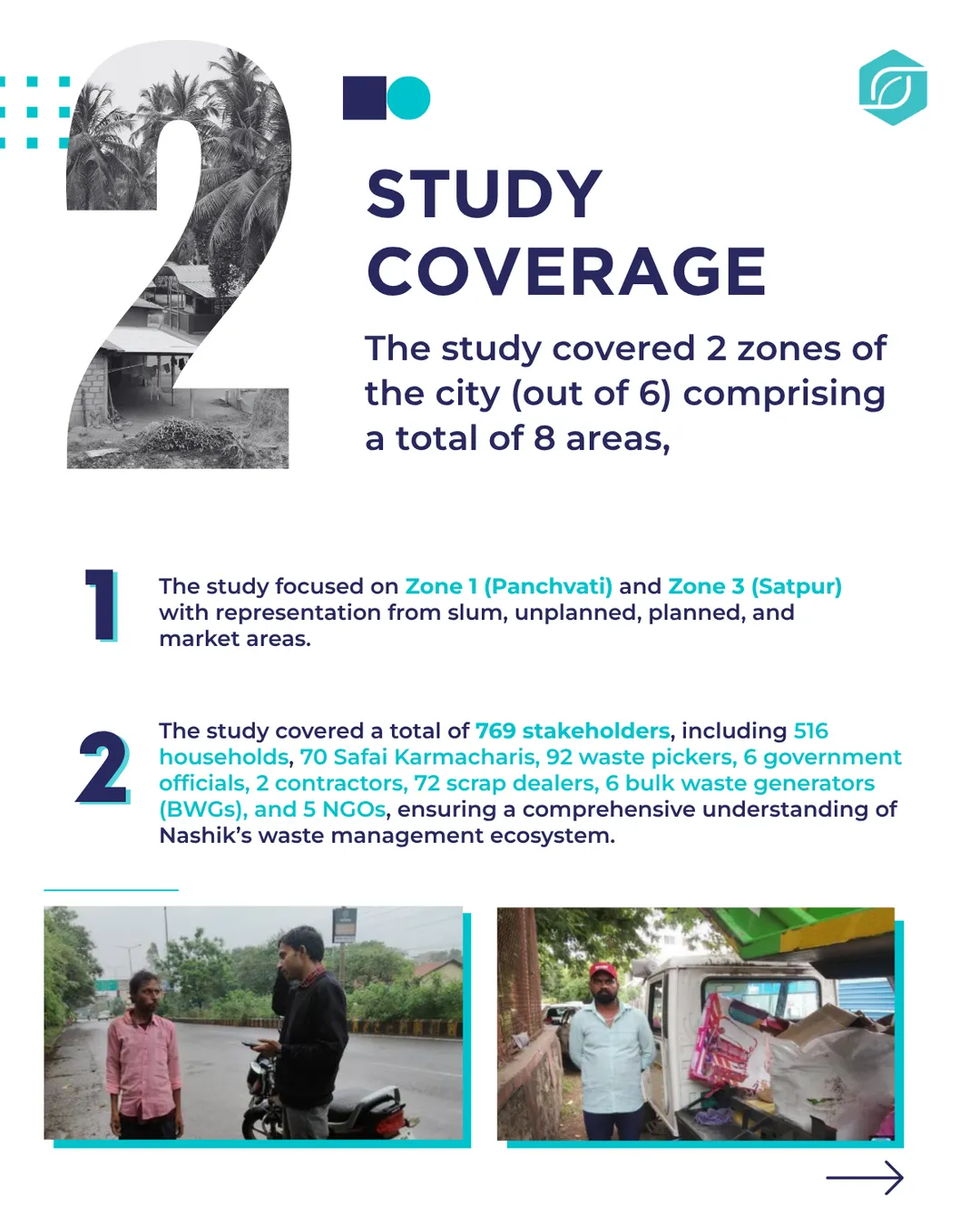
Focusing on Zone 1 (Panchvati) and Zone 3 (Satpur) — 2 of the city’s 6 zones — across 8 areas spanning slum, unplanned, planned and market settings.
Engaging 769 stakeholders for a comprehensive view of Nashik’s waste-management ecosystem.
Using the baseline to partner with companies on a sustainability transition.
Results
Related case studies
Not sure which EPR applies to you?
Check your applicability free in 60 seconds, or talk to our compliance team.
Or call +91 95942 59275 · [email protected]