ULB Capacity Building for the Urban–Rural Nutrient & Carbon Cycle
Assessing wet-waste management and building SOPs across 12 ULBs in Maharashtra.
Overview. Social Lab assessed existing wet-waste and composting practices across 12 Urban Local Bodies in Maharashtra, then built capacity through SOP workshops and handholding to move them toward HARIT compliance.
Project story
Swipe through the project as we published it — real slides from the field.
Background
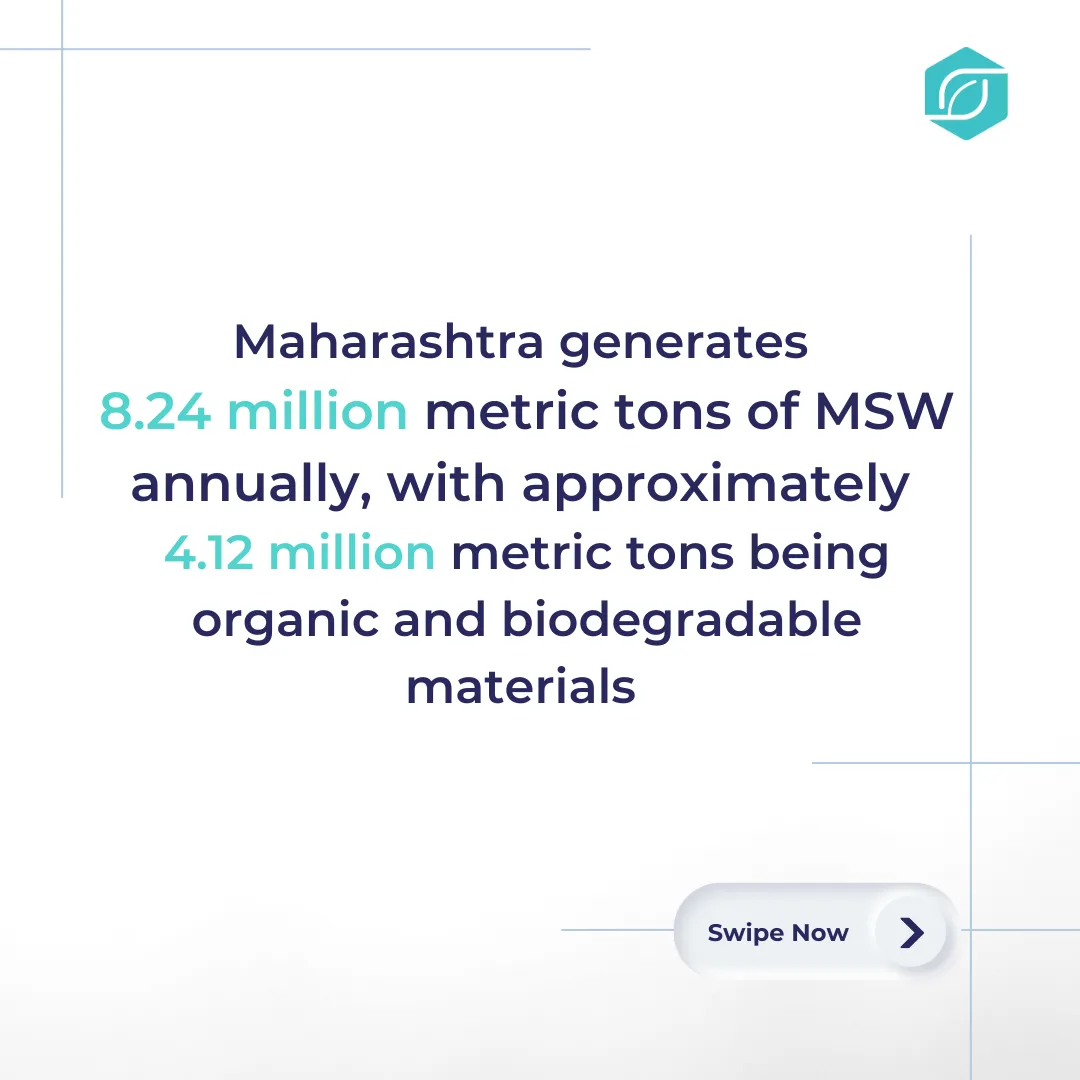
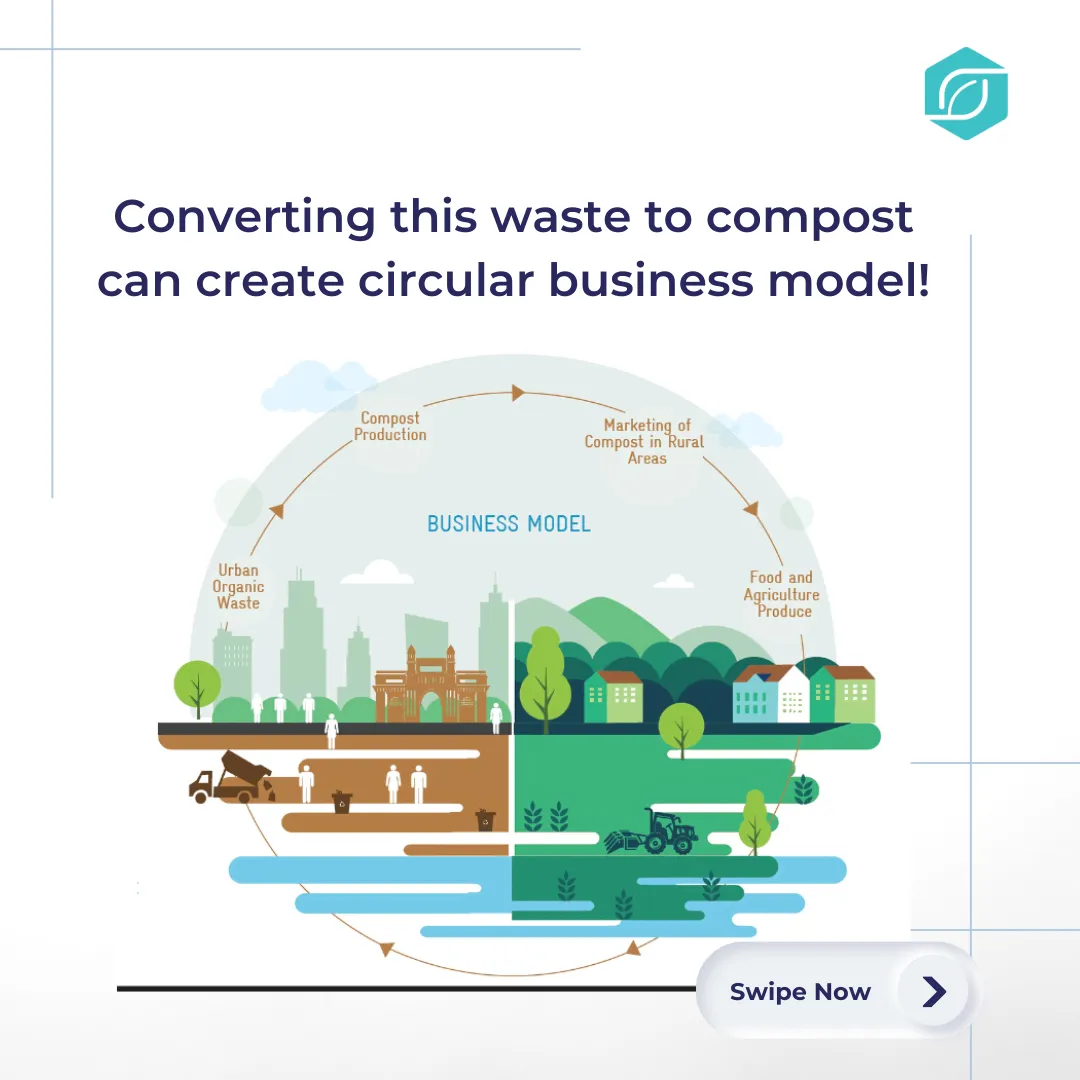
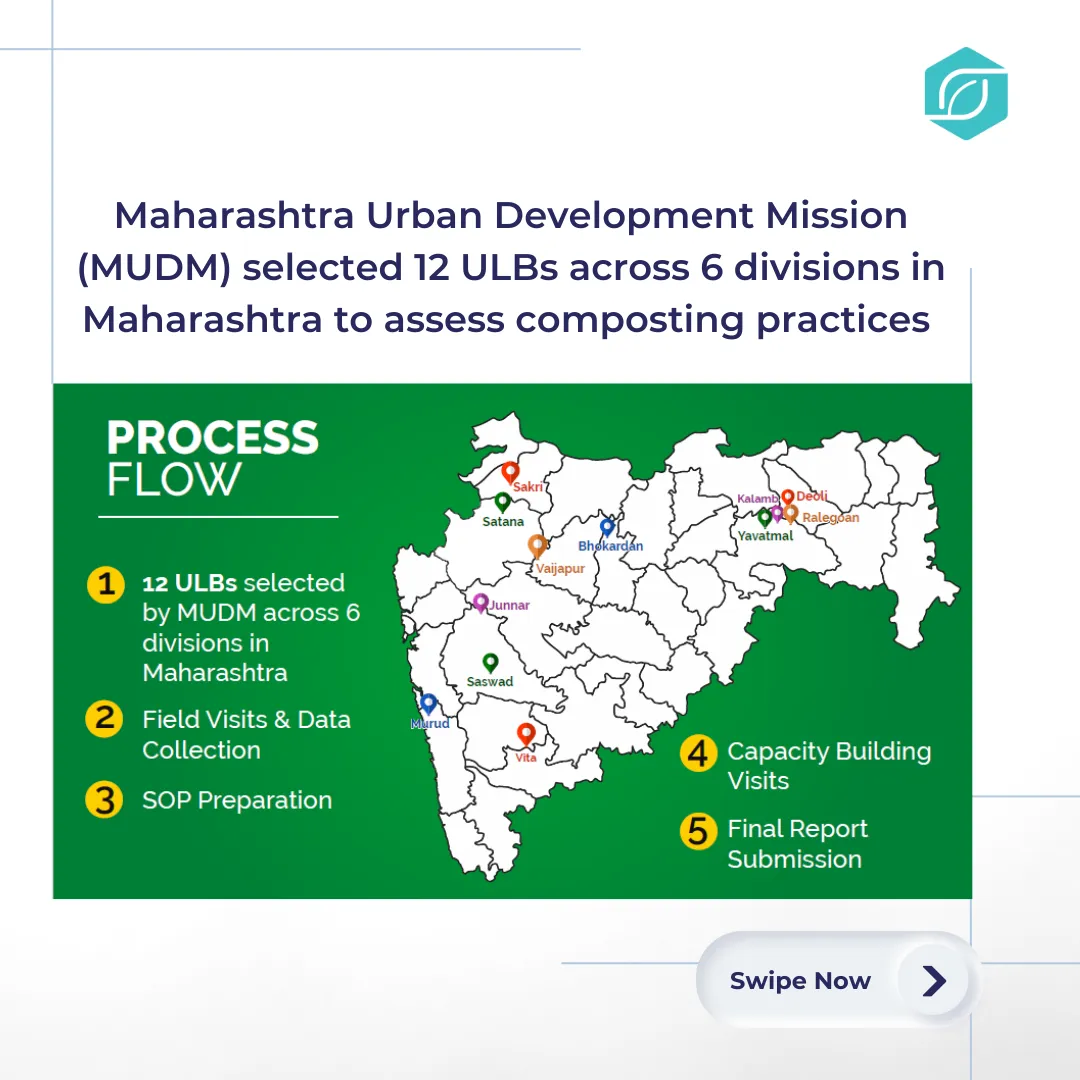
Under “Catalyzing the Urban–Rural Nutrient and Carbon Cycle in Maharashtra,” Social Lab worked with NABARD and GIZ on a simple but powerful idea: Maharashtra generates about 8.24 million metric tonnes of MSW a year, of which roughly 4.12 million tonnes is organic and biodegradable. Converting that wet waste into quality compost — urban organic waste → compost production → marketing in rural areas → food and agriculture — turns a disposal problem into a circular business model. The Maharashtra Urban Development Mission (MUDM) selected 12 ULBs across 6 divisions for the work.
The challenge
Across Maharashtra’s ULBs, wet-waste composting practices varied widely with gaps against the standard process needed for quality compost — limiting the urban–rural nutrient and carbon cycle and HARIT compliance.
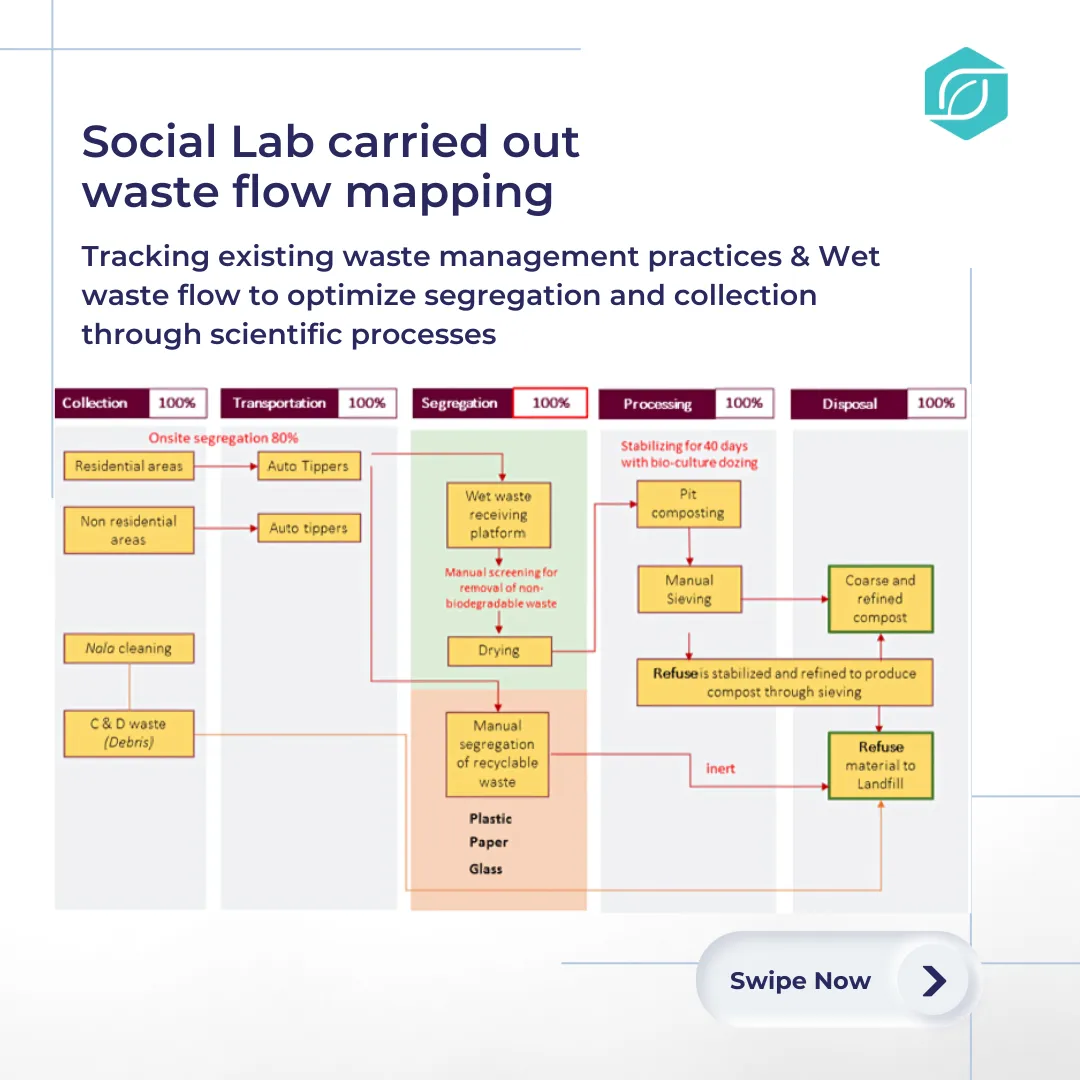
Social Lab carried out waste-flow mapping (tracking existing practices and wet-waste flow to optimise segregation and collection), created detailed Standard Operating Procedures (SOPs) for effective composting, and ran capacity-building workshops on waste processing and segregation at source.
Our approach
Field visits and data collection to assess composting processes across 12 selected ULBs and identify gaps versus the standard quality-compost process.
Capacity building of ULBs through Standard Operating Procedure workshops for technical knowledge on waste processing.
Deep handholding support for segregation at source through awareness, plus capacity building for ULB sanitation staff.
Identifying immediate and long-term steps to make these ULBs HARIT compliant, with a recommendation for the State to issue guidelines to make HARIT sustainable.
Results
The 12 selected ULBs spanned Sakri, Satana, Bhokardan, Vaijapur, Kalamb, Deoli, Ralegaon, Yavatmal, Junnar, Saswad, Murud and Vita — six divisions, one shared roadmap to HARIT-compliant composting.
Related case studies
Not sure which EPR applies to you?
Check your applicability free in 60 seconds, or talk to our compliance team.
Or call +91 95942 59275 · [email protected]